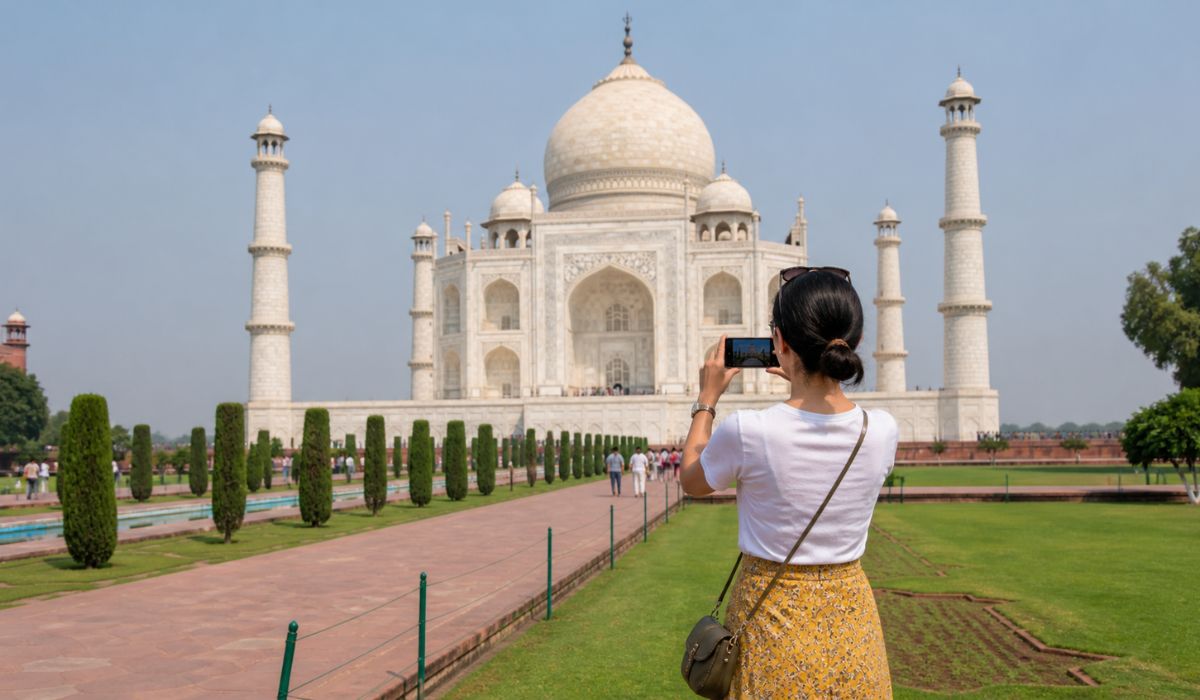
Most people who visit Agra spend their time standing in a long queue at the Taj Mahal’s main gate, surrounded by hundreds of tourists, squinting at the marble dome from behind a sea of raised cameras. The experience is beautiful, no doubt. But it leaves very little room to breathe.
There is another side to Agra — quieter, greener, and almost entirely overlooked. A place where the Taj Mahal appears through the gaps of trees, birds call out before the sun fully rises, and the morning mist sits low over the Yamuna River. That place is Taj Nature Walk.
If you are visiting Agra and you want one memory that feels genuinely different from every tourist trail you have walked before, this is the place.
Slots fill up fast in peak season — secure your verified guide or tour today, one message away on WhatsApp.
💬 Chat on WhatsAppWhat is Taj Nature Walk?
Taj Nature Walk is an eco-park located along the eastern bank of the Yamuna River, just behind the Taj Mahal complex in Agra. It is a forest reserve managed by the Archaeological Survey of India and the Agra Development Authority, spread across roughly 50 acres of green land.
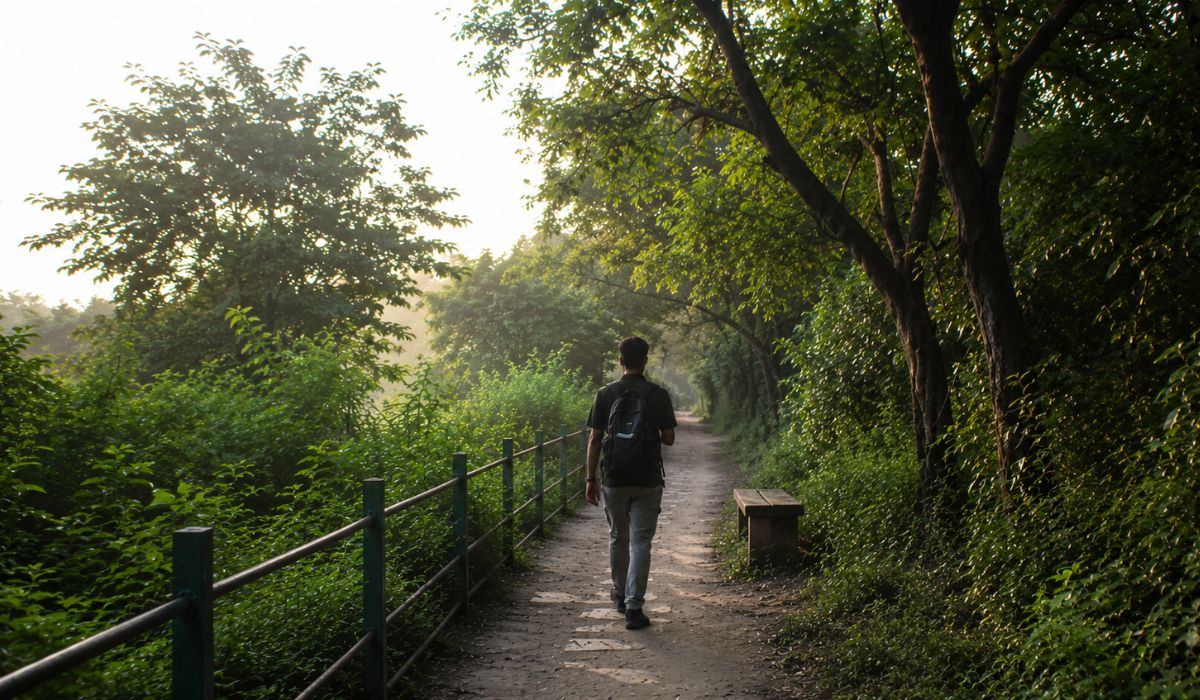
The park was created to protect the green belt around the Taj Mahal and to offer visitors a natural walking space away from the city’s noise and congestion. Inside, there are walking trails winding through trees, open patches of grass, and spots along the riverbank where you can see the Taj Mahal standing quietly on the other side of the Yamuna.
What makes it special is exactly what it is not. There are no vendors, no souvenir stalls, no crowds pushing you forward. Just trees, birds, a river, and one of the most beautiful monuments in the world visible in the distance.
Why Taj Nature Walk Feels Different From Other Attractions in Agra
Agra is a city that can feel overwhelming. The traffic near Taj Mahal’s entry gates, the constant offers from auto-rickshaw drivers, the sheer volume of tourists moving through the complex — it all builds up. By the time you walk out, you may feel more tired than moved.
Taj Nature Walk gives you the opposite experience.
The crowds here are thin, even during peak tourist season. Most visitors to Agra simply do not know this place exists. On a typical morning, you may walk for an hour and encounter only a handful of other people — a few early risers, maybe a couple of serious bird watchers, and the occasional photographer with a tripod set up along the trail.
The pace here is slow. There is no rush to move from one monument to the next. You walk at your own speed, stop when something catches your eye, and sit down near the river if you want to. It is a rare thing in Agra — a place that invites you to stay a little longer.
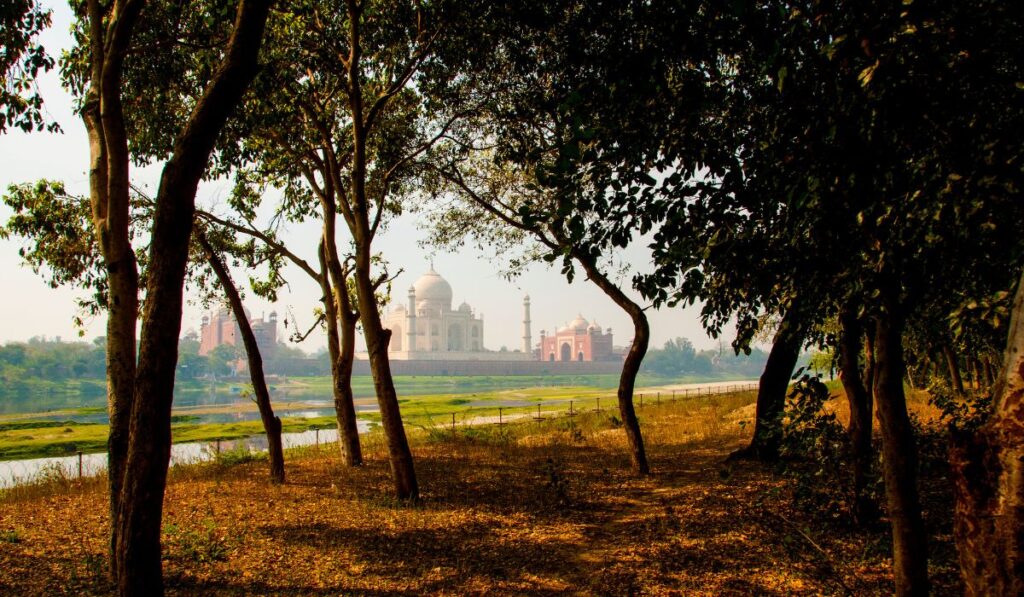
And then there are the views. The Taj Mahal looks entirely different from this side. Seen through the trees, framed by branches and green foliage, with the Yamuna in the foreground, it feels less like a monument and more like something out of a painting.
Best Things to Do at Taj Nature Walk
Walk the nature trails. The park has designated trails through the forest. They are not long or difficult — this is a gentle walk, not a hike. But they take you deep enough into the greenery that the city noise disappears entirely.
Find the Taj Mahal viewpoints. There are open spots along the riverbank where the Taj Mahal is fully visible across the water. These are the best places to stand for a few minutes and take in the view without anyone asking you to move.
Sunrise walk. This is the main reason most travelers come here. Arriving just before sunrise means you see the sky change colour while the Taj Mahal slowly comes into the light. The experience is calm and genuinely moving in a way that standing inside the main complex often is not.
Bird watching. The park has a good variety of resident and migratory birds. Peacocks are a regular sight, especially in the morning. You will also spot kingfishers near the water, painted storks, common hoopoes, and various egrets. Carry binoculars if you have them.
Photography: Whether you are using a professional camera or just your phone, the composition options here are excellent. Trees framing the Taj Mahal, birds on low branches, soft morning light on the river — every few steps there is something worth photographing.
Sit by the Yamuna. Sometimes the best thing you can do is simply sit near the riverbank and do nothing. The view across the water is peaceful in a way that is hard to describe until you are actually there.
Taj Nature Walk Sunrise Experience
Come early. That is all you really need to know.
If you arrive at the park just before the sun rises — roughly around 5:30 to 6:00 AM depending on the time of year — you will walk into a world that feels completely separate from the Agra outside. The air is cooler, the light is soft and grey, and the entire park is quiet.
As you walk toward the riverbank, the Taj Mahal gradually appears through the tree line. At this hour, it is still half-dark, the marble holding onto the last of the night’s colour. Then the sky begins to shift — pale orange near the horizon, slowly deepening.
When the first light finally touches the Taj Mahal’s dome, the whole thing glows. It is a warm, gentle gold, completely different from the harsh bright white of midday photographs. The mist over the Yamuna adds a softness to everything.
Birds are most active at this hour. The peacocks call. Kingfishers dart along the water’s edge. Everything feels alive but unhurried.
If you are a photographer, this is your hour. If you are not, come anyway. Some experiences do not need a camera.
Best Time to Visit Taj Nature Walk
October to March is the best period. The weather is comfortable, the mornings are cool, and the air is clear enough for good photography. Winter mornings — December and January — bring mist over the river that makes the sunrise views especially beautiful. For general travel planning around Uttar Pradesh, UP Tourism’s official site has seasonal guides and permit information worth checking before your trip.
Sunrise timing varies through the year. In winter, sunrise is around 6:30 to 7:00 AM. In summer, it is closer to 5:30 AM. Aim to arrive at the park at least 30 minutes before sunrise.
Monsoon season (July to September) brings lush greenery to the park and the bird watching is excellent, but the rain and humidity can make the trails muddy and visibility is sometimes poor.
Evenings are also pleasant, particularly in the cooler months. The late afternoon light on the Taj Mahal from the riverbank is softer than midday and makes for good photographs.
Avoid visiting during peak summer (April to June) if you can. Temperatures in Agra regularly cross 40 degrees Celsius, and the midday heat is genuinely difficult.
Photography Guide for Taj Nature Walk
Taj Nature Walk may be the best photography location in Agra that most travelers have never heard of.
Best spots for photographs:
- The open riverbank sections where the Taj Mahal is fully visible across the Yamuna
- Areas where branches frame the dome — look for these along the trail edges
- Any spot where you can include the river in the foreground with the Taj in the background
Mobile photography tips: You do not need expensive equipment here. A modern smartphone handles the soft morning light very well. Use portrait mode for close-up nature shots. For the Taj Mahal across the river, use your phone’s standard or slight wide-angle setting to include the river and sky.
Sunrise photography: Arrive before the sun is up. Set up near the river. The best light lasts about 20 to 30 minutes after sunrise — the golden hour here is genuinely golden.
Framing through trees: Walk slowly along the trail and look for natural frames — gaps in branches, overhanging leaves, tree trunks on either side. The best Taj Nature Walk photographs often have greenery in the foreground.
One practical tip: bring a small cloth to wipe your lens in the early morning. The humidity near the river can cause condensation on your camera or phone.
Bird Watching and Nature Experience
Taj Nature Walk is one of the better spots for bird watching near Agra, largely because it sits along the Yamuna river and has mature trees that attract a range of species. If you want to track sightings or check which birds have been recently recorded in this area before your visit, eBird India is a genuinely useful resource — birders regularly log observations from the Agra riverfront zone.
Commonly spotted birds:
- Indian Peafowl (peacocks) — very common, especially in the morning
- Common Kingfisher
- Black-winged Stilt
- Painted Stork
- Common Hoopoe
- Various egret species
- Indian Pond Heron
- Rose-ringed Parakeet
The riverbank sections are best for water birds. The forested trail sections are better for woodland species. Mornings are significantly better than afternoons for bird activity.
If you are a serious bird watcher, bring binoculars. Even if you are not, walking slowly and paying attention to sounds will surprise you. The park is genuinely alive in a way that the city around it is not.
Entry Fee, Timings and Visitor Information
Opening hours: Taj Nature Walk is open from sunrise to sunset. Most visitors come early morning, between 6:00 AM and 9:00 AM, to catch the sunrise and the best light.
Entry fee: The entry fee is nominal — typically around INR 50 for Indian nationals and INR 200 for foreign visitors, though fees can be revised, so confirm at the gate.
How much time do you need: Two to three hours is ideal for a relaxed visit. If you are doing the sunrise walk and then some bird watching and photography, plan for about two and a half hours.
What to carry:
- Comfortable walking shoes
- Water bottle
- Light jacket or shawl in winter mornings
- Binoculars if you have them
- Insect repellent (for evening visits or monsoon season)
Practical tip: The park has limited facilities inside. Carry your own water. There are usually vendors just outside the gate if you need tea before or after your walk.
How to Reach Taj Nature Walk
From the Taj Mahal (East Gate): Taj Nature Walk is located approximately 1 to 1.5 kilometres from the Taj Mahal’s eastern gate. It is a short drive or a manageable walk.
From Agra Cantt Railway Station: The park is about 5 to 7 kilometres away. Auto-rickshaws, e-rickshaws, and taxis are readily available.
From Agra Fort: About 4 to 5 kilometres by road.
Local transport: E-rickshaws are the most convenient and affordable option for getting around this part of Agra. Agree on the fare before you get in. Taxis are available through hotels and apps like Ola.
The park’s entrance is on the road running along the eastern bank of the Yamuna. If you are asking locals, say “Taj Nature Walk” or reference it as being near the Taj Mahal’s east side — most drivers will know it.
Taj Nature Walk vs Mehtab Bagh: Which One Should You Visit?
Both Taj Nature Walk and Mehtab Bagh offer views of the Taj Mahal from across the Yamuna, but they are quite different experiences.
| Taj Nature Walk | Mehtab Bagh | |
|---|---|---|
| Best time | Sunrise | Sunset |
| Crowd level | Very low | Moderate |
| Atmosphere | Wild, natural, forested | Formal Mughal garden |
| Photography | Trees, river, natural frames | Open, wide, symmetrical |
| Activities | Walking trails, bird watching | Garden walk, Taj views |
| Entry fee | Low | Low to moderate |
| Experience | Slow, immersive | More structured |
If you are in Agra for more than a day, visit both. Start your first morning at Taj Nature Walk for the sunrise, and end your last evening at Mehtab Bagh for the sunset view. They complement each other well.
If you only have time for one, choose based on what you value more: a natural, slightly wild, forested experience (Nature Walk) versus a more composed, garden-style setting (Mehtab Bagh).
Can You Combine Taj Nature Walk With a Taj Mahal Tour?
Absolutely, and this is actually one of the best ways to experience Agra.
A Sunrise Taj Mahal Tour works perfectly when combined with Taj Nature Walk. You can begin at the Nature Walk before the sun rises, spend an hour or so watching the light change and photographing the Taj from across the river, and then make your way to the Taj Mahal’s east or south gate for the main visit as it opens.
If you are coming from Delhi on a Same Day Agra Tour, an early departure means you can reach Agra in time for sunrise, fit in both the Nature Walk and the Taj Mahal in the morning, and still have time for Agra Fort and Mehtab Bagh before returning.
Travelers on an Overnight Agra Tour have the most flexibility — they can visit Taj Nature Walk on the first morning, spend time at the main Taj Mahal complex, and still have an evening for Mehtab Bagh or the local markets without feeling rushed.
Amsah Tours offers well-planned Agra day trips and overnight tours that can include Taj Nature Walk as part of your itinerary.
Nearby Attractions Worth Visiting
While you are in this part of Agra, several other places are worth adding to your plan:
Taj Mahal — Just across the river from the Nature Walk. The world’s most recognised monument and a UNESCO World Heritage Site, still worth every minute inside.
Agra Fort — A UNESCO World Heritage Site, about 4 kilometres from the Nature Walk. Magnificent Mughal architecture and history.
Mehtab Bagh — The formal Mughal garden directly across the Yamuna from the Taj Mahal. Best for sunset views.
Kinari Bazaar — Agra’s old market area near Jama Masjid. Good for local street food, spices, and handicrafts.
Itimad-ud-Daulah — Often called the “Baby Taj,” a smaller but beautifully detailed Mughal tomb that most tourists skip.
Practical Travel Tips for Taj Nature Walk
Start early. The best version of this place is the early morning version. Arriving by 6:00 AM or earlier gives you the light, the birds, and the quiet.
Wear comfortable shoes. The trails are natural paths — not paved. Good walking shoes or sports shoes are better than sandals.
Dress in layers for winter visits. Agra mornings in December and January are cold, sometimes below 10 degrees Celsius near the river. A jacket is necessary.
Keep noise low. The appeal of this place is the silence. Talk quietly, avoid loud music, and you will notice far more — both birds and the general atmosphere.
Do not litter. The park is clean. Keep it that way.
Carry cash. The entry gate may not have digital payment options.
Hire a guide if you want depth. A local guide who knows the bird species and the best photography corners can make a real difference, especially if you are a bird watcher or photographer.
Is Taj Nature Walk Worth Visiting?
Honestly, yes — and not just as an add-on to the main Taj Mahal visit.
If you are someone who wants more from travel than just ticking off famous monuments, Taj Nature Walk offers something genuinely different. It is one of those places that does not try to impress you. It just exists — peaceful, quiet, occasionally spectacular — and lets you decide how much time to spend.
The sunrise from the riverbank, the Taj Mahal glowing through the mist, peacocks walking through the trees — these are the kinds of memories that tend to stay.
It is not perfect. The facilities are basic. It is not a manicured experience. But that, in a city as heavily visited as Agra, is actually the point.
If you are planning an Agra trip and want to see the city beyond the obvious, put Taj Nature Walk on your list.
Frequently Asked Questions
1. What is Taj Nature Walk in Agra?
Taj Nature Walk is an eco-park located along the eastern bank of the Yamuna river, near the Taj Mahal in Agra. It is a forested green space with walking trails, river views, and direct sightlines to the Taj Mahal, offering a peaceful alternative to the main tourist complex.
2. Where exactly is Taj Nature Walk located?
It is located approximately 1 to 1.5 kilometres from the Taj Mahal’s east gate, on the road running along the eastern bank of the Yamuna river in Agra.
3. What is the entry fee for Taj Nature Walk?
The entry fee is approximately INR 50 for Indian nationals and INR 200 for foreign visitors. Fees are subject to revision, so it is best to check at the gate on the day of your visit.
4. What are the opening hours of Taj Nature Walk?
The park is generally open from sunrise to sunset. The most popular visiting time is early morning, between 6:00 AM and 9:00 AM.
5. Can you see the Taj Mahal from Taj Nature Walk?
Yes. There are clear viewpoints along the Yamuna riverbank inside the park where the Taj Mahal is fully visible across the water. The view is especially beautiful at sunrise.
6. Is Taj Nature Walk good for photography?
Yes, it is one of the best photography spots in Agra for natural framing of the Taj Mahal. The combination of trees, the river, and morning light creates compositions that are very different from standard Taj Mahal photographs.
7. What birds can you see at Taj Nature Walk?
Common sightings include Indian Peafowl, Common Kingfisher, Painted Stork, Common Hoopoe, Black-winged Stilt, and various egret species. Morning visits offer the best bird activity.
8. Is Taj Nature Walk crowded?
It is one of the least crowded places near the Taj Mahal. Even during peak tourist season, the visitor numbers here are a fraction of what you see at the main monument. Early morning visits are particularly quiet.
9. How do I get to Taj Nature Walk from the Taj Mahal?
The park is about 1 to 1.5 kilometres from the Taj Mahal’s east gate. E-rickshaws and auto-rickshaws are readily available in the area for the short journey.
10. Is Taj Nature Walk better than Mehtab Bagh?
They offer different experiences. Taj Nature Walk is better for a natural, forested, sunrise walk with bird watching. Mehtab Bagh is better for a structured garden experience with open sunset views. If possible, visit both on the same Agra trip.
Related Articles You May Find Helpful
Planning your Agra trip further? These guides from Amsah Tours cover everything you need:
- How to Photograph the Taj Mahal Like a Pro — Best Angles and Lighting Tips
- Taj Mahal Banned Items: What NOT to Bring Inside — Complete 2026 Guide
- Taj Mahal Dress Code and Rules for Foreign Tourists — 2026 Guide
- Agra Hidden Gems: 10 Secret Places You Must Explore Beyond the Taj Mahal
- 10 Things You Can Do in Agra: A Must-Visit Destination in India
- Mehtab Bagh Agra: Complete Visitor Guide
- Fatehpur Sikri Travel Guide 2026: History, Timings, Tickets & Travel Tips