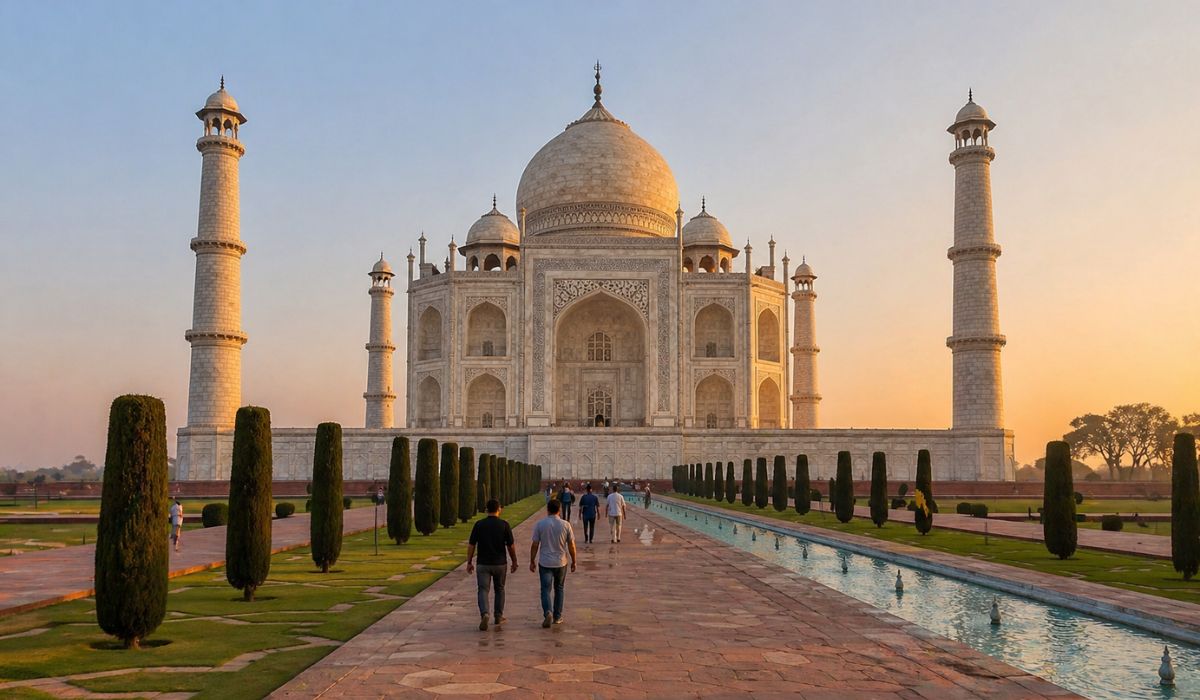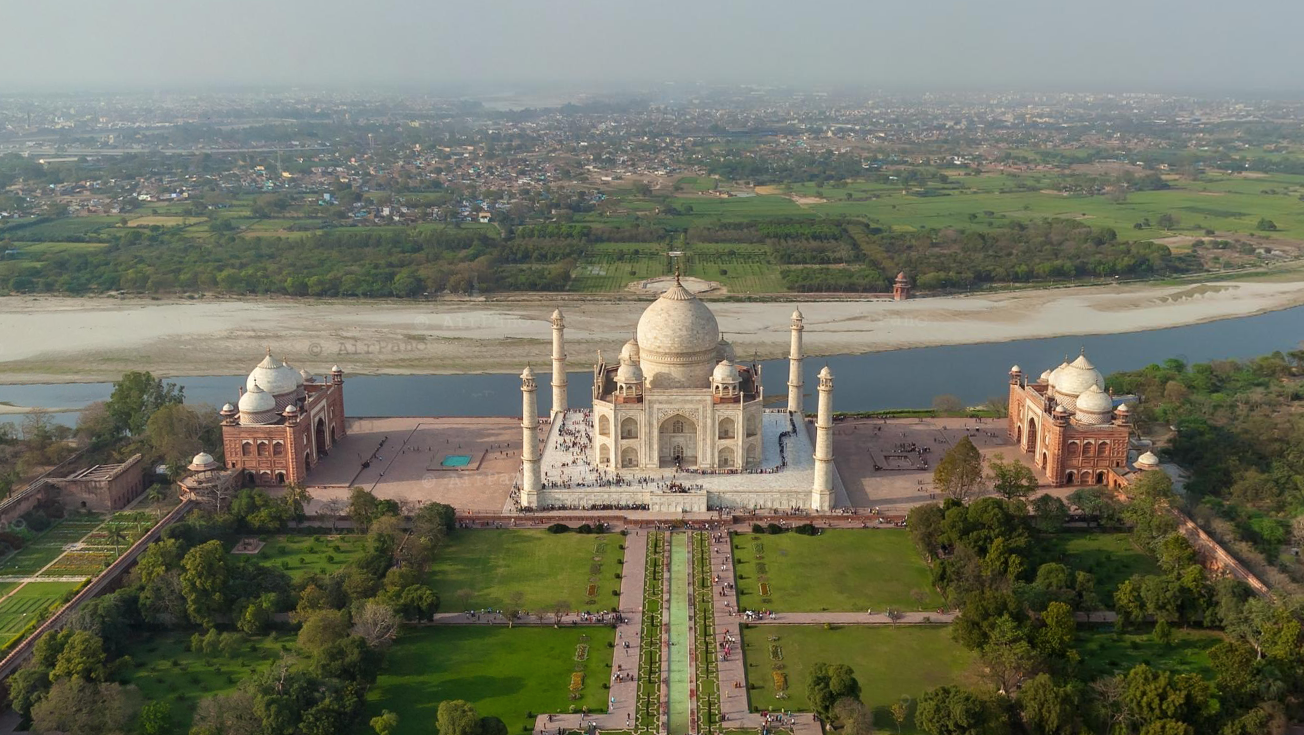
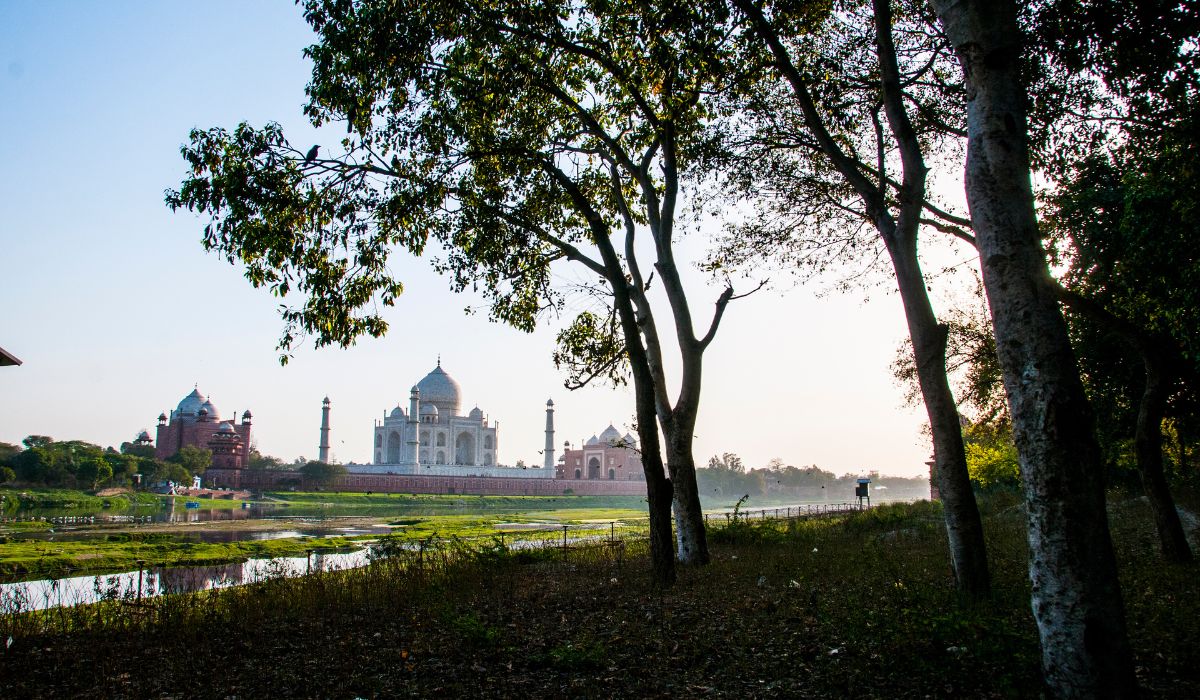
At a Glance — Mehtab Bagh Agra Mehtab Bagh (Moonlight Garden) is a Mughal-era garden complex located directly across the Yamuna River from the Taj Mahal in Agra, India. Built by Emperor Babur and later restored by Shah Jahan, it offers the most unobstructed, crowd-free view of the Taj Mahal — especially at sunrise and sunset. Entry fee: ₹300 (foreigners), ₹25 (Indians). Open sunrise to sunset, all days.
Key Takeaways
- Mehtab Bagh sits directly north of the Taj Mahal, across the Yamuna River — giving you a perfectly framed, reflection-pool view of the iconic monument.
- It is far less crowded than the Taj Mahal complex itself, making it ideal for relaxed photography and quiet exploration.
- The best time to visit is during sunrise or golden hour before sunset — the light and reflections are extraordinary.
- Entry is affordable: ₹25 for Indian nationals and ₹300 for foreign tourists (2026 rates).
- The garden follows the classic Charbagh (four-quadrant) Mughal layout and was originally designed as a mirror garden to the Taj.
- Winter (October to March) is the best season to visit for weather and visibility.
- It takes roughly 1 to 1.5 hours to explore the site comfortably.
- Combine it with an overnight Agra tour from Delhi for the most rewarding experience.
Slots fill up fast in peak season — secure your verified guide or tour today, one message away on WhatsApp.
💬 Chat on WhatsAppQuick Facts About Mehtab Bagh
| Detail | Information |
|---|---|
| Full Name | Mehtab Bagh (Moonlight Garden) |
| Location | Dharmapuri, Nagla Devjit, Agra, Uttar Pradesh |
| Built By | Emperor Babur (originally); restored by Shah Jahan |
| Built In | Early 16th century (restored ~17th century) |
| Managed By | Archaeological Survey of India (ASI) |
| Opening Hours | Sunrise to Sunset (approx. 6:00 AM – 6:30 PM) |
| Entry Fee (Indian) | ₹25 per person |
| Entry Fee (Foreign) | ₹300 per person |
| Time Required | 1 to 1.5 hours |
| Distance from Taj Mahal | Approx. 1 km (across the Yamuna River) |
| Distance from Agra Cantt | Approx. 6–7 km |
| Distance from Delhi | Approx. 230 km |
| Photography | Allowed (no tripod restrictions for personal use) |
| Best Time to Visit | October to March |
| Best Time of Day | Sunrise or late afternoon (golden hour) |
Introduction to Mehtab Bagh
If you’ve already visited the Taj Mahal and thought, “I wish I could see it from further away without the crowds” — Mehtab Bagh is your answer.
Mehtab Bagh Agra is a hidden gem that most tourists skip, and that’s exactly what makes it so special. While thousands of visitors crowd into the Taj Mahal complex every day, Mehtab Bagh sits quietly on the opposite bank of the Yamuna River, offering a breathtaking, unobstructed view of the Taj Mahal’s northern face.
The name “Mehtab Bagh” translates to Moonlight Garden in Urdu and Persian. According to historical accounts, Shah Jahan would sit here on full moon nights, gazing at the moonlight shimmering off the Taj Mahal — one of the most romantic settings imaginable.
Whether you’re a photographer chasing the perfect shot, a couple looking for a quiet romantic spot, or a history lover wanting to understand the full Mughal vision behind the Taj Mahal, Mehtab Bagh is an experience you cannot afford to miss on your Agra itinerary. Agra is one of India’s most iconic travel destinations — and the Agra tourism guide on Incredible India is a great starting point for first-time visitors planning their trip.
This guide covers everything you need to know — history, timings, ticket prices, photography tips, and practical travel advice — so you can make the most of your visit. For region-specific travel planning, Uttar Pradesh Tourism also provides useful visitor resources for Agra and surrounding heritage sites.
History of Mehtab Bagh
Mehtab Bagh has a layered history that spans over 500 years. It was built during the early Mughal period and was closely connected to the planning and aesthetics of the Taj Mahal complex. Understanding its history makes the visit far more meaningful.
Who Built Mehtab Bagh?
Mehtab Bagh was originally laid out by Emperor Babur, the founder of the Mughal Empire, in the early 16th century (around 1508–1530 AD). Babur was passionate about Persian-style gardens and introduced the concept of formal Mughal gardens to the Indian subcontinent.
However, the garden fell into disrepair and was later renovated and redesigned by Emperor Shah Jahan in the mid-17th century — the same emperor who built the Taj Mahal. Shah Jahan had a grand vision: Mehtab Bagh was meant to serve as the northern garden of the Taj Mahal complex, directly across the river.
Some historical texts and records from Shah Jahan’s court suggest he may have even considered building a Black Taj Mahal — a mirror image of the white Taj — on this site. While archaeologists have not found definitive proof of this plan, the idea has fired the imagination of historians and tourists for centuries.
Mughal Era Significance
During the Mughal era, the Yamuna River was much wider and more prominent than it is today. The garden was positioned so that the reflection of the Taj Mahal could be seen in a large octagonal pool at the northern end of Mehtab Bagh.
This reflection pool was a deliberate architectural choice. Shah Jahan wanted visitors standing in Mehtab Bagh to see the Taj Mahal and its perfect mirror image in the water simultaneously — doubling the visual grandeur of one of the world’s greatest monuments.
The garden also functioned as a pleasure garden where the royal family would walk, relax, and enjoy moonlit evenings. The name “Mehtab” (moonlight) comes from the tradition of visiting the garden on full moon nights, when the white marble of the Taj Mahal glows silver across the river.
Restoration and Preservation
By the 19th and early 20th centuries, Mehtab Bagh was severely neglected. Flooding from the Yamuna River had buried much of the original structure under silt. The garden had become an agricultural field used by local farmers.
In the 1990s, the Archaeological Survey of India (ASI), with support from the Aga Khan Trust for Culture, began a major restoration project. Excavations revealed the original Charbagh layout, water channels, fountains, and the octagonal pool. The restoration was largely completed by the early 2000s.
Today, Mehtab Bagh is a well-maintained ASI-protected monument and an increasingly popular addition to the Agra tourist circuit. It forms part of the wider Taj Mahal conservation zone — recognised as a UNESCO World Heritage Site since 1983 for its outstanding universal value.
Where is Mehtab Bagh Located?
Exact Location
Mehtab Bagh is located at Dharmapuri, Nagla Devjit, Agra, Uttar Pradesh 282001, on the northern bank of the Yamuna River. It lies directly opposite the Taj Mahal, making it the only garden in Agra that faces the Taj Mahal’s northern facade across the river.
Google Maps Search: Type “Mehtab Bagh Agra” and you’ll find it immediately.
Coordinates: 27.1782° N, 78.0419° E
Distance from Taj Mahal
Mehtab Bagh is approximately 1 kilometre from the Taj Mahal as the crow flies, but by road (crossing the Yamuna via the nearest bridge), the distance is around 3 to 4 kilometres. The drive typically takes 10 to 15 minutes depending on traffic.
You cannot walk directly from the Taj Mahal to Mehtab Bagh — the Yamuna River separates them. You’ll need to take an auto-rickshaw, e-rickshaw, cab, or taxi.
How to Reach from Delhi
Delhi to Agra is approximately 230 km via the Yamuna Expressway or NH19. Here are your main travel options:
| Mode of Travel | Time | Cost (approx.) | Best For |
|---|---|---|---|
| Private Car/Cab | 3–3.5 hours | ₹3,000–₹5,000 one way | Families, groups |
| Gatimaan Express Train | 1 hour 40 mins | ₹750–₹1,500 | Fast travelers |
| Shatabdi Express | 2 hours | ₹600–₹1,200 | Budget travelers |
| Volvo Bus | 3.5–4 hours | ₹300–₹500 | Budget backpackers |
| Taj Express Train | 2.5–3 hours | ₹150–₹500 | Flexible planners |
For a completely hassle-free experience, consider booking a same day Agra tour by car from Delhi — your driver knows Agra’s roads well and can take you directly to Mehtab Bagh.
How to Reach from Agra Cantt Railway Station
Agra Cantonment (Cantt) Railway Station is the main railway station in Agra, located approximately 6 to 7 km from Mehtab Bagh.
- By Pre-paid Auto/Cab: Available at the station exit. Cost: ₹150–₹250.
- By E-rickshaw: Cheap and fun, costs ₹30–₹50, but slower.
- By Cab App (Ola/Uber): Available in Agra; typically ₹100–₹180.
Tell your driver “Mehtab Bagh” — most drivers know the location well.
Why Mehtab Bagh is Famous
Mehtab Bagh is famous primarily for offering the best unobstructed view of the Taj Mahal from the north. Unlike the crowded Taj Mahal complex, Mehtab Bagh gives you open space, silence, and a completely different perspective of the monument.
Best Unobstructed View of the Taj Mahal
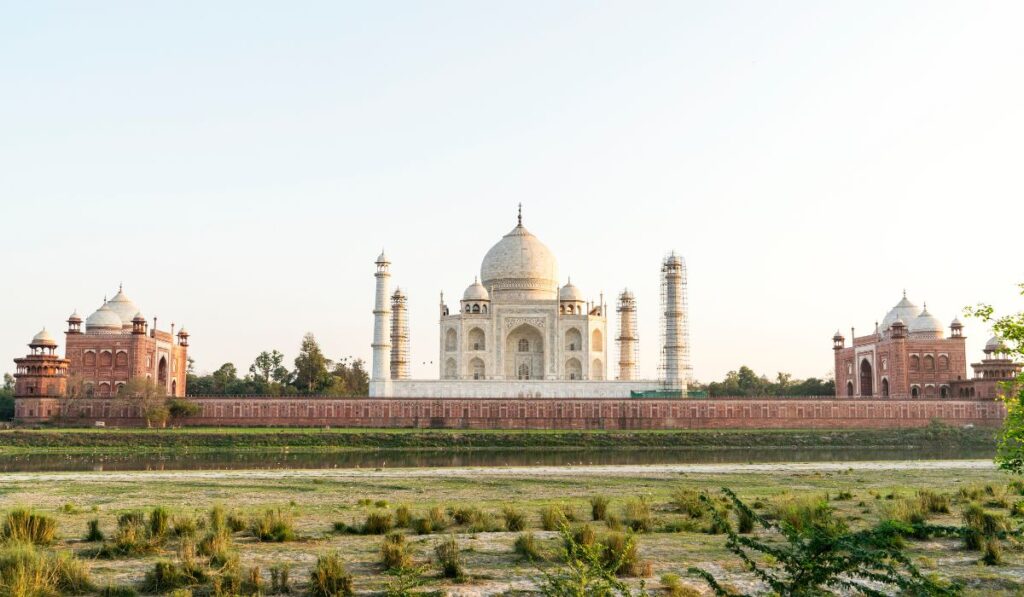
Standing at the northern end of Mehtab Bagh, looking south, you see the full northern facade of the Taj Mahal framed by the Yamuna River. There are no buildings, trees, or crowds blocking your view.
This is the same view that Shah Jahan himself admired. On clear days (especially in winter), the white marble of the Taj Mahal gleams brilliantly against the sky. When the river has water and the light is right, the reflection creates a stunning double image.
Peaceful Alternative to Crowded Tourist Spots
The Taj Mahal receives over 6 to 8 million visitors per year — which means thousands of tourists at any given moment. Mehtab Bagh, by contrast, sees a fraction of that footfall. On most mornings, you may find fewer than a hundred people inside the garden.
This peaceful environment makes it perfect for couples, photographers, elderly visitors, and families with children who want to enjoy Agra’s heritage without being jostled by crowds.
Photography Paradise
For photographers — amateur and professional alike — Mehtab Bagh is a dream location. You get:
- A clear, wide shot of the Taj Mahal’s northern face
- Sunrise and sunset light falling directly on the monument
- Reflection shots in the octagonal pool (seasonal)
- Green gardens and Mughal architecture as foreground elements
- Minimal crowds in the frame
Mehtab Bagh frequently appears in professional travel photography and has become one of the most Instagram-worthy spots in all of Agra.
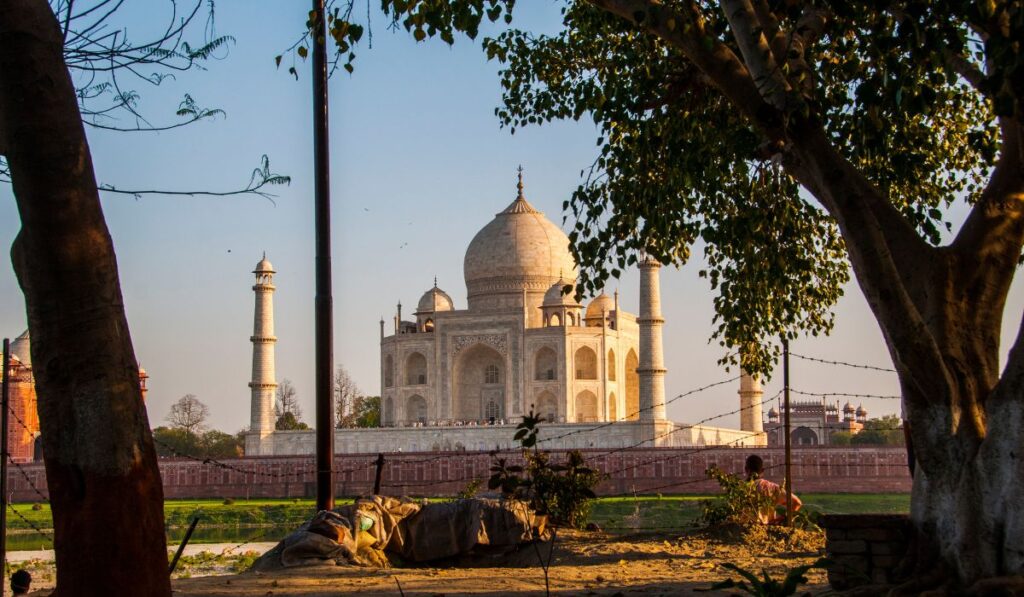
Mehtab Bagh Taj View Point
What is the Taj View Point?
The Taj View Point at Mehtab Bagh is the northern end of the garden complex where a large octagonal pool and viewing platform are located. This is the primary viewpoint from which visitors look across the Yamuna River to see the Taj Mahal.
The Taj View Point is not a separate entry — it is included within the Mehtab Bagh complex. You pay a single entry fee and walk through the garden to reach it. It takes about 10 to 15 minutes to walk from the entrance gate to the viewpoint.
Why it is One of the Best Taj Mahal View Points
The viewpoint at Mehtab Bagh is widely considered the best alternative viewpoint for the Taj Mahal for several reasons:
- Axis alignment: The viewpoint is perfectly aligned with the Taj Mahal’s central axis, giving you a symmetrical, straight-on view.
- Distance: Being roughly 1 km away, you can see the full monument — from base to the tip of the central dome — in one frame.
- No foreground clutter: Unlike shots from inside the Taj complex (where other tourists, vendors, and trees often intrude), here the view is clean.
- Lighting: Sunrise light hits the Taj’s northern face directly, creating a warm golden glow.
Sunrise Experience
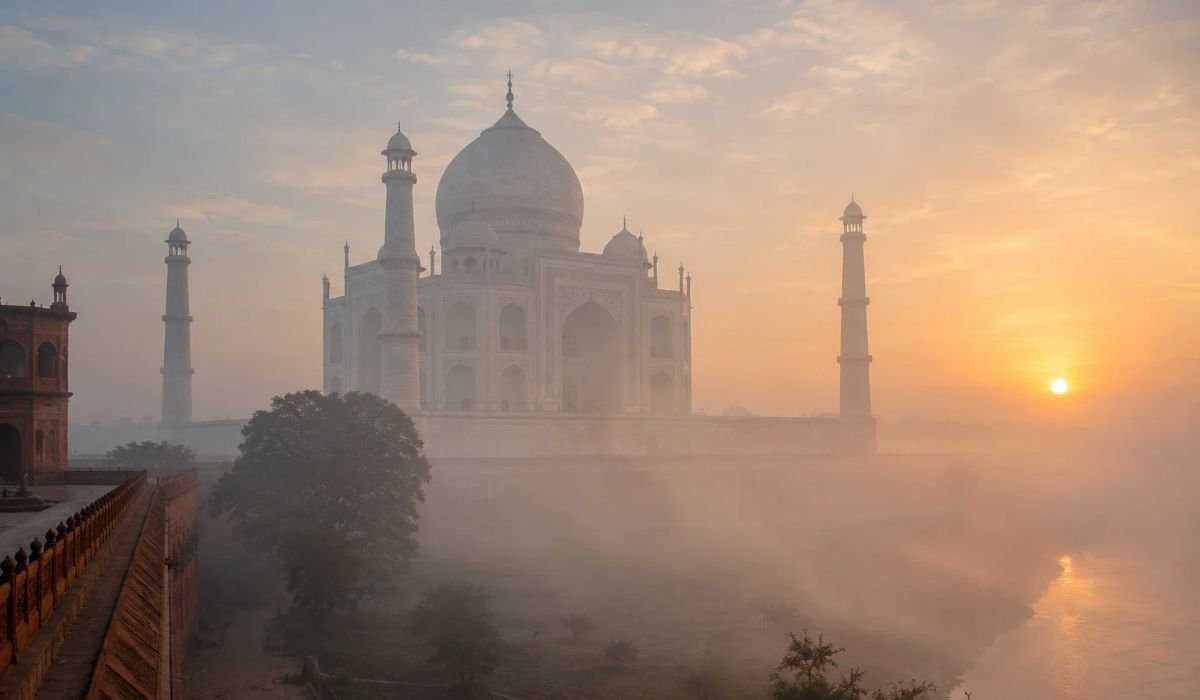
Arriving at Mehtab Bagh for sunrise is one of the most magical experiences in Agra. The garden opens at sunrise, and if you position yourself at the northern viewpoint as the sun rises in the east, you’ll see the Taj Mahal slowly emerge from the morning mist, glowing amber and gold.
The Yamuna River often has a light morning mist in winter, which adds a dreamy, ethereal quality to the scene. Very few tourists are present this early, making it an almost private viewing experience.
Sunset Experience
Sunset at Mehtab Bagh is equally stunning. As the sun drops in the west, it casts a warm orange and pink light on the Taj Mahal’s white marble. The monument takes on a rosy hue that is completely different from its midday or morning appearance.
For the best sunset experience, arrive at least 45 minutes before sunset to find a good spot and let your eyes adjust to the light. The garden typically closes at or just after sunset.
Photography Opportunities
| Photography Type | Best Time | Tips |
|---|---|---|
| Sunrise glow shot | 6:00–7:00 AM (winter) | Use a wide-angle lens |
| Reflection pool shot | Early morning (best Oct–Jan) | Low angle, slow shutter |
| Silhouette shot | 10 minutes before sunrise | Position yourself carefully |
| Golden hour shot | 4:30–6:00 PM | Shoot from the octagonal pool |
| Taj Mahal panorama | Any clear day | Use portrait orientation |
| Garden + Taj frame | Mid-morning | Include garden paths as foreground |
Difference Between Mehtab Bagh and Taj View Point
Many people confuse the two. Here’s the simple answer:
Mehtab Bagh is the entire garden complex — the Charbagh layout, water channels, pathways, and green spaces.
Taj View Point refers specifically to the octagonal pool area at the north end of Mehtab Bagh — the spot from which you get the iconic view of the Taj Mahal across the river.
In short, the Taj View Point is inside Mehtab Bagh. You visit both with a single ticket.
Best View of Taj Mahal from Mehtab Bagh
Sunrise Views
The sunrise view of the Taj Mahal from Mehtab Bagh is world-class. The Taj faces south, but its northern face — the one visible from Mehtab Bagh — catches the soft side light of early morning beautifully. In winter months (November to February), morning mist over the Yamuna creates an almost supernatural atmosphere.
Pro tip: Arrive 20 minutes before official sunrise time to catch the pre-dawn blue light, then stay for 30 minutes after sunrise for the golden light phase.
Sunset Views
Sunset is possibly even more dramatic. The western sky lights up behind you while the Taj Mahal, to your south, catches the reflected warm light. The white marble turns shades of peach, salmon, and gold as the sun descends. On clear days, the colours are vivid and deeply photogenic.
Seasonal Views
| Season | View Quality | Special Features |
|---|---|---|
| Winter (Oct–Mar) | Excellent | Morning mist, clear skies, comfortable weather |
| Summer (Apr–Jun) | Good | Hazy light, heat shimmer, few tourists |
| Monsoon (Jul–Sep) | Variable | Lush greenery, misty views, occasional clouds |
| Post-Monsoon (Oct) | Very Good | Crystal clear air, greenery, comfortable temperatures |
Mehtab Bagh Timings and Entry Fee
Opening Hours
Mehtab Bagh is open every day of the week, from sunrise to sunset.
| Day | Opening Time | Closing Time |
|---|---|---|
| Monday | Sunrise (~6:00 AM) | Sunset (~6:30 PM) |
| Tuesday | Sunrise (~6:00 AM) | Sunset (~6:30 PM) |
| Wednesday | Sunrise (~6:00 AM) | Sunset (~6:30 PM) |
| Thursday | Sunrise (~6:00 AM) | Sunset (~6:30 PM) |
| Friday | Sunrise (~6:00 AM) | Sunset (~6:30 PM) |
| Saturday | Sunrise (~6:00 AM) | Sunset (~6:30 PM) |
| Sunday | Sunrise (~6:00 AM) | Sunset (~6:30 PM) |
Note: Exact opening and closing times vary slightly with sunrise/sunset across seasons. Always check locally or with your guide on the day of your visit. Unlike the Taj Mahal, Mehtab Bagh is not closed on Fridays.
Ticket Prices (2026)
| Visitor Category | Entry Fee |
|---|---|
| Indian Nationals | ₹25 per person |
| Foreign Tourists | ₹300 per person |
| SAARC/BIMSTEC Citizens | ₹25 per person |
| Children below 15 years | Free |
| Camera (still/video) | No additional charge |
Important: Tickets are available at the gate. As of 2026, there is no official online booking for Mehtab Bagh tickets — purchase them at the entry counter.
Time Required for Visit
Plan to spend 1 to 1.5 hours at Mehtab Bagh. This gives you enough time to:
- Walk through the Charbagh garden
- Explore the water channels and pathways
- Reach the northern viewpoint
- Spend 30–45 minutes at the Taj View Point
- Take photographs at leisure
If you’re a photographer or visiting for sunrise/sunset, plan for 2 hours.
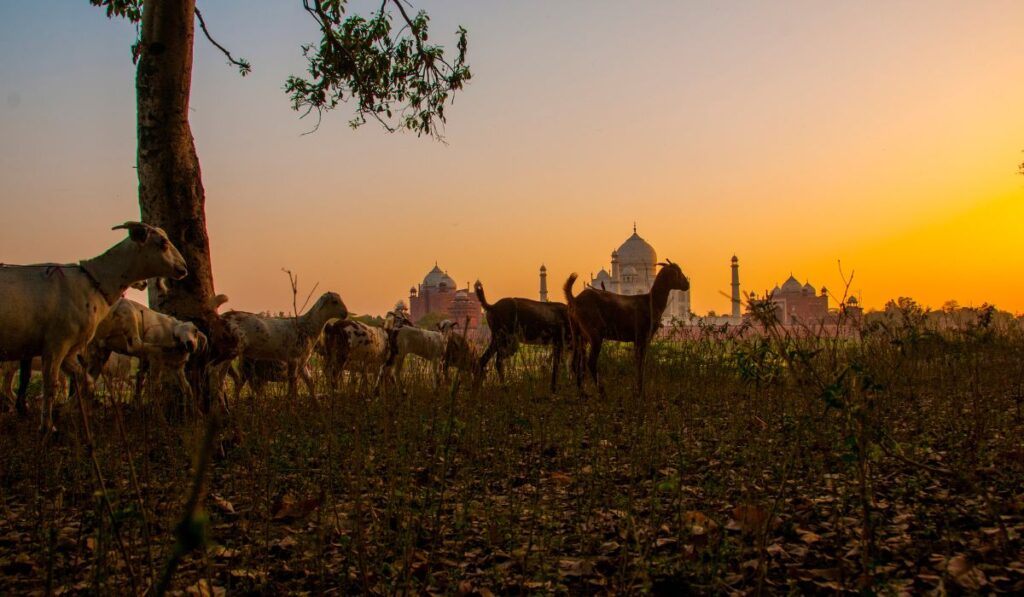
Best Time to Visit Mehtab Bagh
The best time to visit Mehtab Bagh is between October and March, when the weather in Agra is pleasant, the skies are clear, and the Taj Mahal’s white marble looks its most brilliant against a blue sky.
Best Time to Visit — Seasonal Guide
| Season | Months | Weather | Crowds | Recommendation |
|---|---|---|---|---|
| Winter | Oct–Mar | 8°C – 25°C | Low to Medium | ⭐⭐⭐⭐⭐ Best |
| Post-Monsoon | Oct–Nov | 18°C – 30°C | Low | ⭐⭐⭐⭐⭐ Excellent |
| Spring | Feb–Mar | 15°C – 28°C | Medium | ⭐⭐⭐⭐ Very Good |
| Summer | Apr–Jun | 30°C – 48°C | Very Low | ⭐⭐ Challenging |
| Monsoon | Jul–Sep | 25°C – 36°C | Very Low | ⭐⭐⭐ Interesting |
Summer (April to June)
Agra summers are brutal — temperatures regularly exceed 40°C and can touch 48°C in May and June. If you visit during summer, go at sunrise only and leave before 9:00 AM. Carry plenty of water, wear light cotton clothing, and use sunscreen liberally.
The upside? Almost no tourists. You’ll often have Mehtab Bagh entirely to yourself.
Winter (October to March)
This is the peak season for Agra tourism and the absolute best time to visit Mehtab Bagh. Daytime temperatures range from a comfortable 15°C to 25°C. Morning mist over the Yamuna River creates magical photography conditions. Evenings are cool and pleasant.
December and January mornings can be foggy — sometimes very foggy — which can reduce visibility of the Taj Mahal. If you’re visiting specifically for the view, aim for late October, November, or February–March for the clearest skies.
Monsoon (July to September)
Monsoon brings rain, humidity, and lush greenery to Mehtab Bagh. The garden looks beautiful — vibrant and green — but the Yamuna River rises significantly, which can affect access and sometimes flood parts of the garden’s lower areas.
Cloudy, dramatic skies can actually make for very atmospheric photography. If you don’t mind occasional showers, monsoon visits can be surprisingly rewarding and entirely crowd-free.
What to See Inside Mehtab Bagh
Charbagh Layout
The garden follows the Charbagh (Persian: چهارباغ, meaning “four gardens”) design — a quadrilateral layout divided into four sections by straight pathways and water channels. This was the standard garden design used throughout the Mughal Empire.
Walking through the Charbagh, you immediately sense the geometric precision and symmetry that defined Mughal garden architecture. The pathways are straight, the planting beds are uniform, and the overall layout feels ordered and peaceful.
Water Channels
Mehtab Bagh originally had an elaborate system of water channels (called nahar) and fountains fed by the Yamuna River. During the ASI restoration, many of these channels were excavated and partially restored.
While not all fountains are operational today, the channels and sandstone runnels give you a vivid sense of how the garden would have looked in Shah Jahan’s time — a cool, watered paradise in the middle of the Agra plains.
Gardens and Landscapes
The garden is planted with a mix of flowering trees, ornamental plants, and lawns. In winter, the greenery is lush and well-maintained. The garden has a calm, park-like atmosphere that’s ideal for a slow, contemplative walk.
Unlike the Taj Mahal’s gardens (which are more manicured and formal), Mehtab Bagh has a slightly wilder, more natural feeling — which many visitors actually prefer.
Taj Mahal Viewpoint
The star attraction. Walk to the northern end of the garden and you’ll reach the large octagonal pool, beyond which the ground opens up to reveal the full, magnificent view of the Taj Mahal across the Yamuna.
Stand here, take a breath, and look south. The Taj Mahal — all four minarets, the central dome, the entire platform — is visible in one unbroken, perfectly composed frame. On quiet mornings, the only sounds are birdsong and the distant rush of the river.
Photography Guide for Mehtab Bagh
Best Photography Spots
- Octagonal Pool (northern end): The classic reflection shot. Get low to the ground for a water-level perspective.
- Central Pathway: Use the straight garden path as a leading line pointing toward the Taj Mahal.
- Garden Archways: Frame the Taj through any of the garden’s sandstone arches.
- Raised viewpoint platform: Stand on the slightly elevated platform for a wider panoramic view.
- Garden perimeter walls: Shoot through gaps in the old walls for a framed, textured composition.
Mobile Photography Tips
- Use portrait mode for detail shots of the garden architecture.
- Switch to wide-angle mode for the full Taj panorama.
- Shoot during golden hour (first and last hour of light) for the warmest colours.
- Enable grid lines and use the rule of thirds — place the Taj at the intersection.
- Clean your lens before shooting near the river — dust and humidity can affect image quality.
- Use HDR mode when there’s a bright sky and darker foreground.
Professional Photography Tips
- Best focal length: 24mm–50mm for wide garden shots; 85mm–200mm for compressed Taj close-ups.
- Tripod: Allowed for personal use; bring one for long-exposure sunrise shots.
- Golden hour: Arrive at sunrise for directional light on the Taj’s northern facade.
- Graduated ND filter: Useful to balance the bright sky with the darker garden foreground.
- Drone photography: Currently restricted near the Taj Mahal area. Do not attempt drone flights without special permission from ASI.
- Best month for photographers: November for clear skies and low haze; February for pleasant light and manageable crowds.
Things to Do at Mehtab Bagh
Nature Walks
Mehtab Bagh’s well-maintained pathways are perfect for a quiet morning or evening walk. The garden spans about 25 acres, and a full circuit of the paths takes around 30 to 40 minutes at a leisurely pace. The air near the Yamuna is often fresher than in the city centre, making early morning walks particularly pleasant.
Bird Watching
Mehtab Bagh is a surprisingly good spot for bird watchers. The riverbank environment and the garden’s trees attract a variety of bird species including kingfishers, mynas, sunbirds, bee-eaters, and various migratory birds during winter. Bring binoculars for the best experience.
Family Visits
Mehtab Bagh is one of the most family-friendly sites in Agra. There’s open space for children to run, no major crowds, clean pathways, and enough visual interest to keep everyone engaged. Entry for children under 15 is free.
Sunset Experience
Plan to be at Mehtab Bagh about 1 hour before sunset and stay until closing time. Watch the Taj Mahal change colour as the sun drops — from white to cream to gold to soft pink. It’s one of the most memorable sights in all of India.
Mehtab Bagh vs Other Taj Mahal View Points
| Viewpoint | Distance from Taj | Crowd Level | View Quality | Entry Fee | Best For |
|---|---|---|---|---|---|
| Mehtab Bagh | ~1 km (north) | Low | Excellent — full northern face | ₹25 / ₹300 | Photography, couples, peace |
| Inside Taj Complex | 0m (within) | Very High | Excellent — all sides | ₹1,100 / ₹1,300 | Detailed monument visit |
| Agra Fort | ~2.5 km (west) | High | Good — distant view | ₹40 / ₹600 | Heritage + view combo |
| Taj Mahal Eastern Gate Area | Adjacent | High | Partial | Free (public road) | Quick glimpse |
| Rooftop Restaurants (Agra) | ~0.5–1 km | Low | Good but not perfect | Meal cost | Dining with view |
Mehtab Bagh vs Taj Mahal Complex
The Taj Mahal complex gives you the up-close, in-your-face grandeur of the monument. Mehtab Bagh gives you distance, perspective, and peace. They are two completely different experiences, and the ideal visit combines both.
If you only have time for one, go to the Taj Mahal complex. But if you have even an extra hour, Mehtab Bagh is absolutely worth it — especially for photos.
Mehtab Bagh vs Agra Fort
Agra Fort offers a distant view of the Taj Mahal from its ramparts — the same view that the imprisoned Shah Jahan is said to have gazed at in his final years. The view from the Fort is good but quite distant (2.5 km away).
Mehtab Bagh gives a closer, cleaner, and more directly framed view of the Taj. For pure Taj-viewing, Mehtab Bagh wins. For a combination of Mughal architecture and a Taj view, Agra Fort is the choice.
Best Choice for Photography
Mehtab Bagh wins for photography, hands down. The clean foreground, the distance, the reflection pool, the ability to set up a tripod, and the low crowd levels all make it the superior photography location in Agra.
Nearby Attractions to Visit
| Attraction | Distance from Mehtab Bagh | Entry Fee (Indian/Foreign) | Time Required |
|---|---|---|---|
| Taj Mahal | ~3–4 km by road | ₹50 / ₹1,100 | 2–3 hours |
| Agra Fort | ~5 km | ₹40 / ₹600 | 1.5–2 hours |
| Itimad-ud-Daulah (Baby Taj) | ~3 km | ₹30 / ₹300 | 1 hour |
| Akbar’s Tomb (Sikandra) | ~10 km | ₹30 / ₹310 | 1 hour |
| Fatehpur Sikri | ~40 km | ₹40 / ₹610 | 2–3 hours |
| Ram Bagh | ~2 km | Nominal | 30–45 mins |
Taj Mahal
No Agra trip is complete without visiting the Taj Mahal itself. Check Mehtab Bagh official visitor information on the official Taj Mahal website for entry guidelines and ticket booking. The Taj Mahal sunrise tour from Delhi is one of the most popular ways to experience the monument at its most magical — when the light is perfect and the crowds are thinnest.
Agra Fort
Agra Fort (also known as the Red Fort of Agra) is a UNESCO World Heritage Site and just a short drive from Mehtab Bagh. The fort was the main residence of the Mughal emperors until 1638 and contains stunning palaces, mosques, and halls within its massive red sandstone walls.
Itimad-ud-Daulah (Baby Taj)
Often called the “Baby Taj,” Itimad-ud-Daulah is actually the tomb of Mirza Ghiyas Beg — the grandfather of Mumtaz Mahal (in whose memory the Taj Mahal was built). It’s a beautiful, intricate structure covered in pietra dura inlay work and is considered a precursor to the Taj Mahal’s architectural style.
Akbar’s Tomb
Located in Sikandra, about 10 km from Agra, Akbar’s Tomb is the mausoleum of Emperor Akbar — one of the greatest Mughal rulers. The red sandstone and white marble structure is surrounded by large, deer-populated gardens and is far less visited than the Taj, making it a peaceful and rewarding stop.
Travel Tips for Visitors
What to Carry
- Water bottle: Essential, especially in summer. No shops inside the garden.
- Sunscreen and sunglasses: Agra is sunny and reflective near the river.
- Camera or phone: Obviously — you’ll want to capture this view.
- Cash: Ticket counter may not accept cards; carry small denomination notes.
- Light jacket: For early morning winter visits — it can be chilly near the river.
- Comfortable shoes: Flat, closed-toe shoes work best for walking on stone paths.
What to Wear
- Comfortable, breathable clothing — no dress code restrictions (unlike the Taj Mahal itself).
- Light layers in winter mornings; the temperature near the Yamuna can be 3–5°C cooler than the city.
- Avoid white or very light colours near the river banks (dust and soil can stain easily).
Photography Rules
- Personal photography is freely allowed throughout the garden.
- Tripods are permitted for personal use — no special permission needed.
- Drone photography is prohibited in the Taj Mahal Protected Area (which includes Mehtab Bagh). Violators face legal action.
- Commercial photography or film shoots require prior ASI permission and usually a separate fee.
Safety Tips
- The riverbank beyond the garden boundary can be slippery and unstable — do not venture beyond the marked garden perimeter.
- Keep valuables close and be aware of your surroundings in the parking area outside.
- Official ticket counters are at the main gate — avoid “agents” outside who offer to buy tickets for you.
- If visiting at sunrise, ensure your transport back to the hotel is pre-arranged — autos can be scarce very early in the morning.
Suggested Agra Itinerary Including Mehtab Bagh
Half-Day Plan (4–5 hours)
| Time | Activity |
|---|---|
| 6:00 AM | Reach Mehtab Bagh for sunrise |
| 6:00–7:30 AM | Sunrise photography and garden walk |
| 7:30 AM | Leave for Taj Mahal |
| 8:00–10:30 AM | Taj Mahal visit |
| 10:30 AM | Return to hotel or head to lunch |
One-Day Plan (Full Day)
| Time | Activity |
|---|---|
| 5:45 AM | Depart for Mehtab Bagh |
| 6:00–7:30 AM | Sunrise at Mehtab Bagh |
| 8:00–11:00 AM | Taj Mahal visit |
| 11:00 AM–12:30 PM | Itimad-ud-Daulah (Baby Taj) |
| 12:30–2:00 PM | Lunch at local restaurant |
| 2:30–4:30 PM | Agra Fort visit |
| 5:00–6:30 PM | Fatehpuri Mosque and local market |
| Evening | Dinner and overnight stay in Agra |
Consider booking an overnight Agra tour from Delhi to cover all key attractions without rushing.
Sunset Tour Plan (Best for Couples and Photographers)
| Time | Activity |
|---|---|
| 3:00 PM | Arrive in Agra (from Delhi by car) |
| 3:30–5:00 PM | Agra Fort visit + distant Taj view |
| 5:00–5:15 PM | Drive to Mehtab Bagh |
| 5:15–7:00 PM | Sunset at Mehtab Bagh |
| 7:30 PM | Dinner at a rooftop restaurant with Taj view |
Frequently Asked Questions About Mehtab Bagh Agra
Q1. What is Mehtab Bagh famous for?
Mehtab Bagh is famous for offering the best unobstructed view of the Taj Mahal from the north. Located on the opposite bank of the Yamuna River, it gives visitors a clear, perfectly framed view of the Taj’s northern facade — especially stunning at sunrise and sunset. It’s quieter and more peaceful than the Taj Mahal complex itself.
Q2. What are Mehtab Bagh timings?
Mehtab Bagh is open every day from sunrise to sunset — approximately 6:00 AM to 6:30 PM. Unlike the Taj Mahal, it does not close on Fridays. Exact opening and closing times vary slightly with the seasons.
Q3. What is the Mehtab Bagh ticket price in 2026?
The entry fee for Mehtab Bagh in 2026 is ₹25 per person for Indian nationals and ₹300 per person for foreign tourists. Children under 15 years enter free. Tickets are purchased at the gate — there is no advance online booking.
Q4. Is Mehtab Bagh worth visiting?
Absolutely yes. Mehtab Bagh is one of the most underrated attractions in Agra. The view of the Taj Mahal from here is arguably better for photography than from within the Taj complex itself. The peaceful garden atmosphere, low entry cost, and stunning views make it well worth the visit — especially if you’re interested in photography or history.
Q5. Can you see the Taj Mahal from Mehtab Bagh?
Yes — you can see the complete Taj Mahal from Mehtab Bagh. Standing at the northern viewpoint (at the octagonal pool), you have a clear, unobstructed view of the Taj Mahal’s northern face across the Yamuna River. On clear days, the view is spectacular, and at sunrise and sunset, it is breathtaking.
Q6. What is the best time to visit Mehtab Bagh?
The best time to visit Mehtab Bagh is during the winter months — October to March — when the weather is pleasant and the skies are clear. For the best view of the Taj Mahal, visit at sunrise (for soft golden light) or 45–60 minutes before sunset (for dramatic orange and pink hues). November and February are considered the ideal months overall.
Q7. How far is Mehtab Bagh from the Taj Mahal?
Mehtab Bagh is approximately 1 kilometre from the Taj Mahal as the crow flies, directly across the Yamuna River. By road, it’s around 3 to 4 kilometres, taking 10–15 minutes by auto-rickshaw or cab.
Q8. Who built Mehtab Bagh and when?
Mehtab Bagh was originally built by Emperor Babur, the founder of the Mughal Empire, in the early 16th century. It was later renovated and redesigned by Emperor Shah Jahan in the 17th century as part of the Taj Mahal complex’s northern garden. The Archaeological Survey of India restored the site in the 1990s–2000s.
Q9. Is there a reflection of the Taj Mahal visible in Mehtab Bagh?
The original Mehtab Bagh had a large octagonal pool designed to reflect the Taj Mahal in its surface — creating a double image of the monument. After restoration, the pool exists but may not always have water sufficient for a clear reflection, depending on the season and river water levels. The best chance for a reflection shot is during winter mornings (November–January) when water levels are higher.
Q10. Is photography allowed at Mehtab Bagh?
Yes, personal photography is freely allowed throughout Mehtab Bagh at no extra charge. Tripods are permitted. However, drone photography is strictly prohibited in the Taj Mahal Protected Zone, which includes Mehtab Bagh. Commercial shoots or filming require prior ASI permission and a separate fee.
Q11. How much time do I need at Mehtab Bagh?
Plan for 1 to 1.5 hours for a comfortable visit including the garden walk and time at the viewpoint. If you’re a photographer or visiting for sunrise/sunset, allow 2 hours or more.
Q12. Is Mehtab Bagh open on Friday?
Yes — unlike the Taj Mahal (which closes on Fridays), Mehtab Bagh is open all seven days of the week, from sunrise to sunset.
Q13. Is there a Black Taj Mahal at Mehtab Bagh?
According to some historical sources, Shah Jahan may have planned to build a Black Taj Mahal — a dark mirror image of the white Taj — at Mehtab Bagh. However, archaeologists have not found definitive evidence of construction having started. What they did find during excavations were black-and-white marble tiles and the octagonal pool foundation. The “Black Taj” remains one of the great romantic myths of Mughal history.
Q14. What should I not miss at Mehtab Bagh?
Don’t miss the octagonal pool area at the northern end of the garden — this is the main Taj viewpoint. Also explore the original water channels and pathways, and take time to walk the full Charbagh layout. If you’re visiting at sunrise or sunset, stay until the light changes completely — the colour of the Taj Mahal transforms dramatically over 20–30 minutes during these periods.
Final Thoughts
Mehtab Bagh Agra is one of those rare places that gives you something the most famous attraction next door cannot: perspective, peace, and a moment of genuine wonder.
Most visitors to Agra spend hours fighting crowds inside the Taj Mahal complex and never cross the river to see it from this extraordinary vantage point. That’s their loss — and your opportunity.
Whether you’re planning a same day Agra tour by car from Delhi, a romantic overnight trip, or a dedicated photography excursion, Mehtab Bagh deserves a place in your itinerary. The entry fee is almost nothing. The experience is priceless.
Come for the view. Stay for the silence. Leave with photographs that nobody else from your tour group will have.
For the most seamless way to experience Mehtab Bagh along with Agra’s other iconic monuments, explore AMSAH Tours — specialists in Agra and Taj Mahal tours who know exactly when and how to show you these places at their most spectacular.
Related Articles You’ll Love
- Taj Mahal Sunrise vs Sunset – Which Time Is Better to Visit?
- Agra Hidden Gems: 10 Secret Places Beyond the Taj Mahal
- Agra Cantt to Taj Mahal: The Complete Smart Travel Guide 2026
- Things to Know Before Visiting India (2026 First-Time Guide)
- Overnight Agra Tour from Delhi – Why I Finally Stopped Rushing
- Delhi Food Walk Tour: A Culinary Adventure You Can’t Miss
- Taj Mahal Dress Code & Rules for Foreign Tourists
- Taj Nature Walk in Agra: Hidden Taj Mahal Views and a Peaceful Sunrise Experience
- Fatehpur Sikri Travel Guide 2026: History, Timings, Tickets & Travel Tips