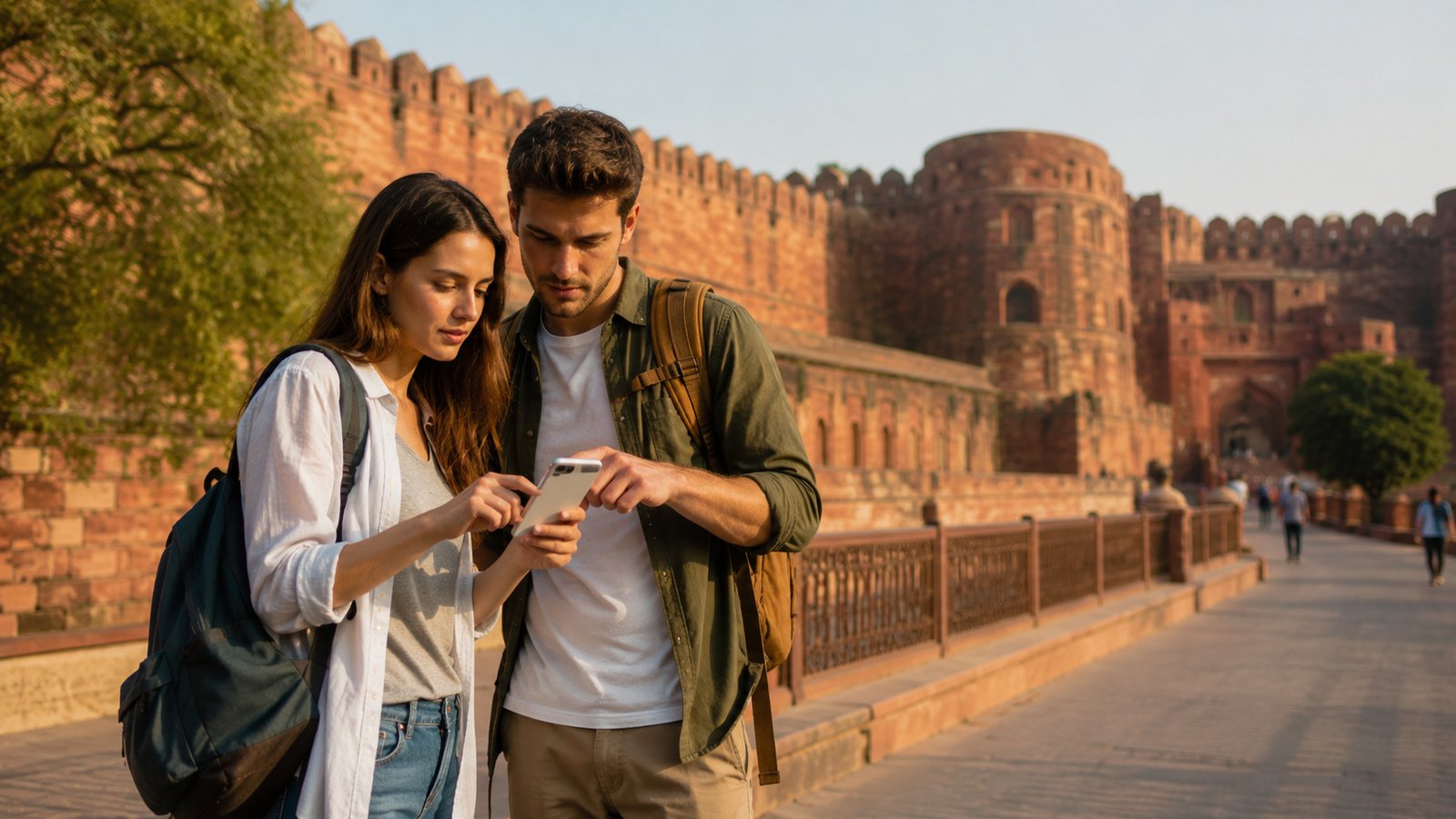
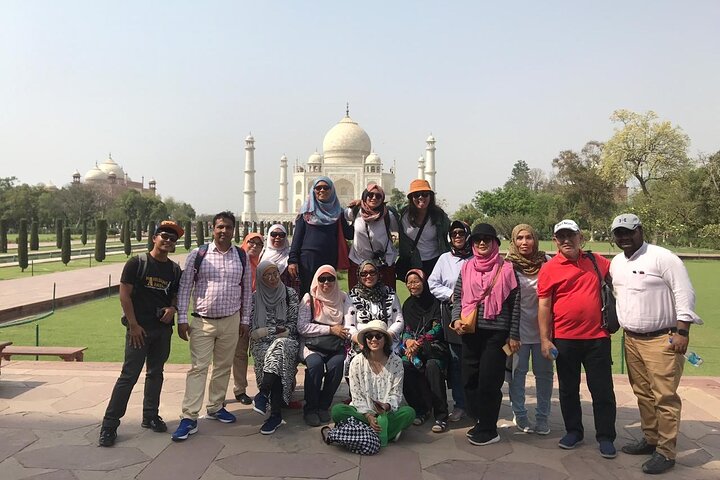
Agra can be confusing for first-time visitors. The moment you step out of your hotel, you’ll be approached by men claiming to be “official guides,” touts offering “skip the line” tickets, and shopkeepers insisting their cousin runs the best marble workshop in town. Somewhere in that noise is a small number of genuinely licensed, knowledgeable guides who can turn a rushed, stressful visit into one of the most memorable days of your trip.
This guide answers every question you might have about hiring a private tourist guide in Agra — who is actually licensed, how much it costs, which languages are available, what scams to watch for, and how a good guide changes the way you experience the Taj Mahal, Agra Fort, and Fatehpur Sikri.
Quick answer: Yes, hiring a private, government-approved tourist guide in Agra is worth it for almost every traveler. A licensed guide saves time at ticket counters, explains history and architecture you can’t get from a plaque or audio device, helps you avoid common scams, and tailors the pace of the visit to your interests — whether that’s photography, history, or simply not standing in the sun for an hour.
Slots fill up fast in peak season — secure your verified guide or tour today, one message away on WhatsApp.
💬 Chat on WhatsAppThis article draws on more than two decades of on-the-ground guiding experience in Agra, including insights from Mohd. Imran Khan, senior private tour guide at Amsah Tours, who has personally guided travelers from the USA, UK, Canada, Australia, and across Europe through these monuments for over 22 years.
Why Hire a Private Tourist Guide in Agra
Agra’s monuments are not simple sightseeing stops — they are layered with Mughal political history, religious symbolism, and architectural detail that isn’t obvious at first glance. A plaque at the entrance gate cannot explain why the Taj Mahal’s dome appears to “breathe” at different times of day, or why Agra Fort was abandoned by its own builder within a decade of completion.
A private guide does three things an audio guide or guidebook cannot:
- Reads the crowd and the clock. Agra’s monuments get exponentially busier after 9:30 AM. A guide who visits these sites almost daily knows exactly when to move you to the next vantage point before a tour bus group arrives.
- Tailors the story to you. A guide can spend ten extra minutes on Mughal architecture for a history enthusiast, or skip straight to the best photo spots for someone short on time.
- Solves problems on the spot. Ticket queue confusion, locker rules, shoe-cover requirements at the Taj Mahal, sudden weather changes — a guide handles these without you losing time or patience.
Our experience at Amsah Tours has shown that travelers who hire a private guide consistently report a calmer, more informative, and more efficient visit than those who go it alone, especially on a first trip to India.
Concise Answer: Is a Guide Necessary at the Taj Mahal?
No, a guide is not legally required to enter the Taj Mahal. However, an official guide is strongly recommended because the monument has no detailed on-site information panels, the layout can be confusing for first-time visitors, and unlicensed touts frequently approach unaccompanied tourists near the ticket counters.
Benefits of Local Guides
A local tourist guide in Agra brings advantages that go beyond historical commentary.
- Time efficiency — Licensed guides know the fastest entry lines, where to find shoe covers, and how to navigate security checks without wasted minutes.
- Authentic context — Stories about Mughal emperor Shah Jahan, the legend (and myth) of the “Black Taj,” or the real reason behind Agra Fort’s red sandstone walls come alive when explained on location.
- Negotiation buffer — A trusted guide can act as a filter between you and aggressive vendors, photographers, or “marble shop” touts.
- Safety and orientation — Especially valuable for solo travelers, seniors, and families, a guide keeps the group together and aware of surroundings in crowded areas.
- Better photographs — Guides who have walked these monuments thousands of times know the angles that avoid crowds, harsh shadows, and construction scaffolding (the Taj Mahal undergoes periodic restoration work).
Based on over 22 years of guiding international travelers, our team has noticed that the biggest difference a good guide makes isn’t the facts — it’s the pacing. Knowing when to linger and when to move on is what separates a forgettable visit from a memorable one.
Licensed vs Unlicensed Guides
This is the single most important distinction to understand before you arrive in Agra.
| Licensed Guide | Unlicensed Tout | |
|---|---|---|
| Authorization | Issued an ID card by the Ministry of Tourism or state tourism department | No official authorization |
| Monument access | Permitted inside ASI-protected sites with ID badge | Often barred from entering certain zones with groups |
| Accountability | Registered, traceable, accountable to tourism authorities | No accountability if something goes wrong |
| Knowledge accuracy | Trained and tested on history, architecture, and protocol | Often repeats exaggerated or inaccurate stories |
| Pricing transparency | Quotes a clear, fair rate in advance | Frequently inflates prices mid-tour or adds hidden “extras” |
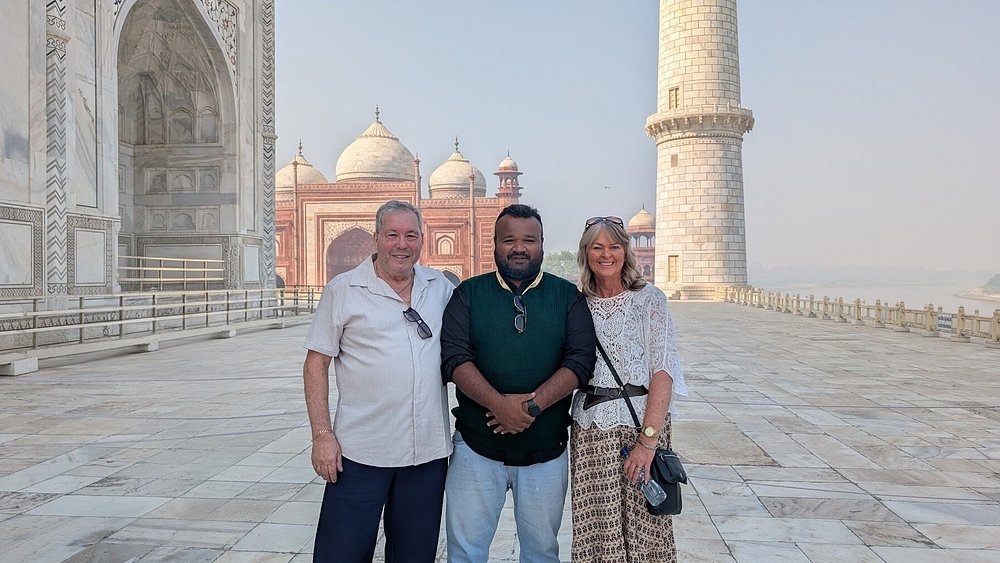
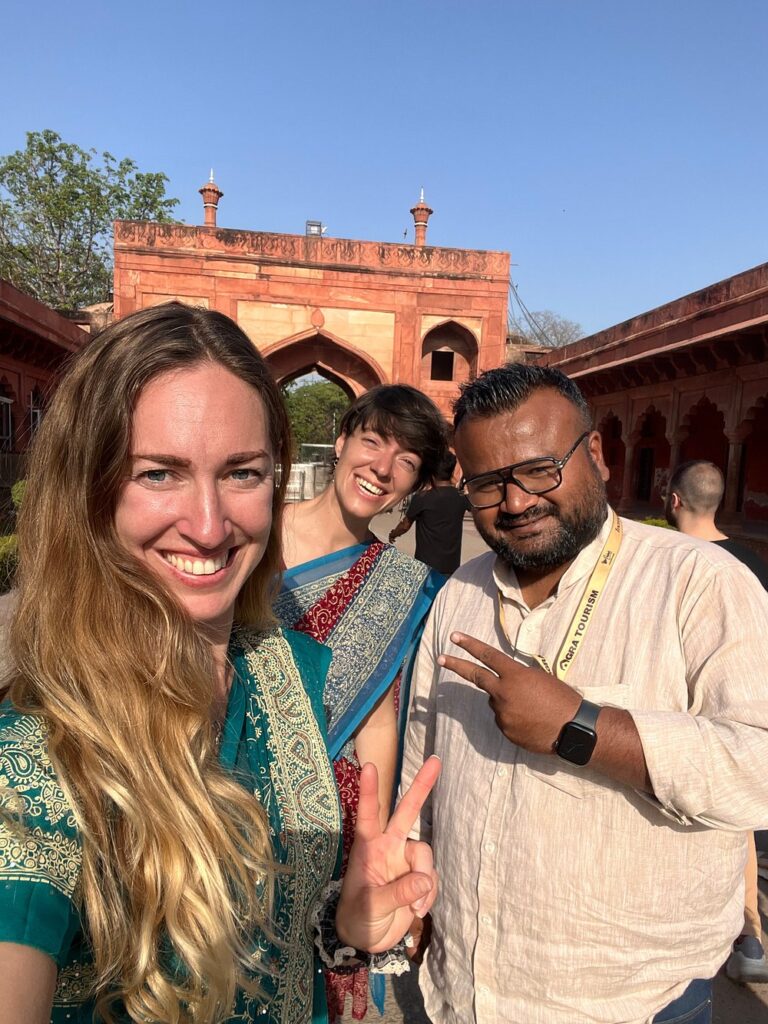
Concise Answer: A licensed tour guide in Agra carries a government-issued identity card, usually displayed on a lanyard, and is registered with the Ministry of Tourism or the regional tourism department. Unlicensed guides typically approach tourists directly outside monument gates and cannot legally accompany large groups inside protected areas.
If someone walks up to you outside the Taj Mahal ticket counter offering an instant tour, that is a strong signal they are not officially licensed. Legitimate guides are almost always booked in advance through a tour operator, hotel concierge, or official guide association.
Government Approved Guides Explained
India’s guiding system has multiple tiers, which often confuses travelers.
- Regional Level Guides — Trained and certified for a specific state or region (such as Uttar Pradesh, where Agra is located). These guides are the most common choice for Agra-specific tours.
- State Level Guides — Certified to guide across an entire state.
- National Level Guides — Certified by the Ministry of Tourism to guide anywhere in India, often used for multi-state itineraries like the Golden Triangle.
All categories require passing a structured training program covering history, archaeology, language proficiency, and tourist handling, followed by written and oral examinations.
Concise Answer: A government-approved guide in Agra has completed an official certification process administered by India’s tourism authorities, holds a valid identity card, and is authorized to operate within ASI-protected monuments such as the Taj Mahal and Agra Fort.
When booking through an established travel agency, this verification is already done for you — one of the practical reasons travelers prefer arranging a guide in advance rather than on arrival.
How to Choose the Right Guide
Not every licensed guide is the right fit for every traveler. Here’s what actually matters:
- Verify the license. Ask to see the ID card. A legitimate guide will show it without hesitation.
- Check language fluency, not just “speaks English.” There’s a meaningful difference between basic conversational English and a guide who can discuss Mughal architecture fluently in your language.
- Ask about specialization. Some guides are stronger on history, others on photography assistance, and some specialize in family-friendly explanations for children.
- Read recent reviews, ideally ones that mention the guide by name rather than just the agency.
- Confirm the itinerary pace in advance. If you want a relaxed half-day vs. a thorough full-day exploration, say so before booking.
- Book through a reputable operator. This removes most of the verification burden and ensures accountability if plans change.
Our local guiding experience suggests that the best match isn’t always the most “famous” guide — it’s the one whose communication style fits how you like to travel, whether that’s fast-paced and photo-focused or slow and detail-oriented.
Common Tourist Mistakes
Many of our guests visiting Agra for the first time often ask the same handful of questions — usually after making one of these mistakes on a previous trip elsewhere.
- Arriving without a plan for the Taj Mahal’s closed days. The Taj Mahal is closed to visitors on Fridays for prayers at the adjacent mosque.
- Underestimating security line times. Bags are screened thoroughly; metal items, food, and certain electronics are restricted.
- Wearing the wrong footwear. Marble surfaces inside the main mausoleum require either bare feet or provided shoe covers — flip-flops can be slippery.
- Booking same-day with no buffer time. Train and flight delays from Delhi are common; a rigid same-day schedule without flexibility causes unnecessary stress.
- Ignoring the heat. Especially between April and June, mid-day visits without water and shade breaks can ruin the experience.
- Trusting unsolicited “helpers.” Anyone who approaches you uninvited near a monument gate is, almost without exception, looking for a commission.
One common mistake we frequently help travelers avoid is treating the Taj Mahal as a 30-minute photo stop. The site rewards a slower, guided visit — most travelers who rush it later regret not learning the history while standing in front of it.
Scams to Avoid
Agra has a well-documented history of tourist-targeted scams, and awareness is your best defense.
- Fake “official” guides. Men wearing lanyards with unofficial badges who approach you directly, claiming government affiliation.
- Marble shop commissions. Guides or drivers who insist on a “quick stop” at a marble or carpet shop are usually earning a commission, and prices there are inflated accordingly.
- Ticket counter “shortcuts.” Touts offering to “skip the line” for a fee, when the actual ticket process is straightforward through official counters or online booking.
- Overcharging for camera/video permits. Always confirm current photography fees directly, not through a third party.
- Inflated transport quotes. Unmetered taxis near the monument gates often quote 3–4 times the standard rate for short distances.
Concise Answer: The most common Agra tourist scam involves unlicensed individuals posing as official guides near monument entrances, who later pressure tourists into shopping detours or demand inflated fees after the fact. Booking a guide in advance through a licensed operator avoids this entirely.
Languages Available
Agra’s guiding community covers a wide range of languages, though availability and fluency level vary significantly.
- English — Widely available, including highly fluent guides for USA, UK, Canada, and Australian travelers.
- Spanish, French, German, Italian — Available but should be requested and confirmed in advance, as fluent guides in these languages are a smaller pool.
- Japanese, Korean, Mandarin — Limited availability; advance booking is strongly recommended.
- Russian — Available through select operators.
An English speaking tour guide in Agra is the most commonly requested option for international travelers and the easiest to arrange on short notice. If you need a guide in a less common language, booking at least a few days ahead — ideally weeks ahead during peak season (October to March) — significantly improves your chances of securing a fluent, licensed guide.
Private Guide vs Audio Guide
Audio guides, available for rent at the Taj Mahal, are a budget-friendly option, but they come with real limitations.
| Factor | Private Guide | Audio Guide |
|---|---|---|
| Interaction | Two-way; you can ask follow-up questions | One-way, pre-recorded narration |
| Pacing | Adjusts to your interest and energy level | Fixed script, same for everyone |
| Crowd navigation | Actively helps you avoid bottlenecks | No real-time guidance |
| Personal stories/insights | Shares decades of on-ground observation | Generic, standardized facts |
| Photography help | Suggests angles and timing | None |
| Cost | Higher | Lower |
Concise Answer: A private guide offers interactive, real-time explanations and crowd navigation, while an audio guide provides a fixed, pre-recorded narration with no ability to ask questions or adjust pacing. For most travelers wanting deeper context and a smoother visit, a private guide delivers significantly more value.
Private Guide vs Group Tour
Group tours are often marketed as the “easy” option, but they come with trade-offs worth understanding.
- Pace control — A private tour moves at your speed; a group tour moves at the group’s average speed, often meaning rushed time at sites you care about most.
- Personal attention — Questions get answered directly and in depth on a private tour. In a group of 20+, individual questions are often skipped for time.
- Photography — Private tours allow the guide to help you compose shots without a crowd of strangers in the frame.
- Schedule flexibility — Want to add 20 extra minutes at Agra Fort? A private guide can adjust on the spot; a group tour cannot.
- Comfort — No waiting for slower group members, no overcrowded transport.
Our experience at Amsah Tours has shown that travelers who’ve previously done a rushed group tour elsewhere are often the ones who appreciate a private guide the most on their second visit to India — the difference in comfort and depth is immediately noticeable.
If you’re planning a broader itinerary, a private guide also pairs naturally with a Private Taj Mahal Tour or a Sunrise Taj Mahal Tour for a more intimate, unhurried experience.
Slots fill up fast in peak season — secure your verified guide or tour today, one message away on WhatsApp.
💬 Chat on WhatsAppTop Attractions Covered
A well-rounded Agra tour guide typically covers the following sites, each requiring a different style of explanation.
Taj Mahal
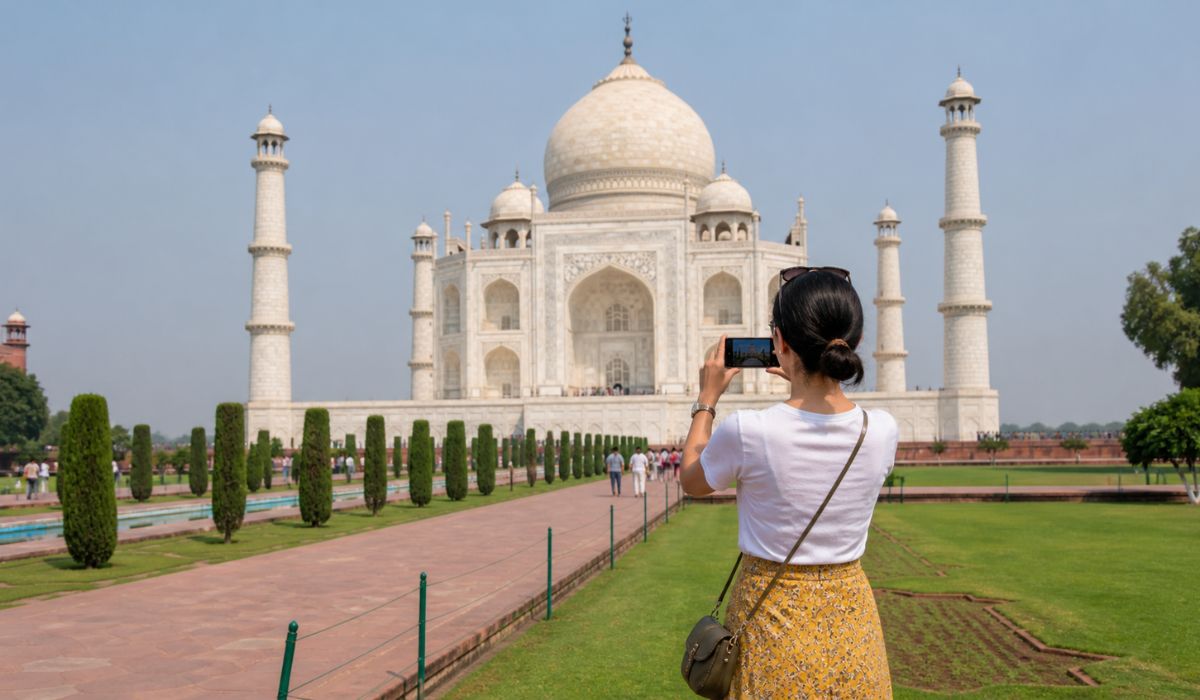
The Taj Mahal isn’t simply a “beautiful white building” — it’s a precisely engineered mausoleum built by Emperor Shah Jahan for his wife Mumtaz Mahal, completed using calculated optical illusions, Persian-influenced garden symmetry, and pietra dura inlay work that took artisans years to complete. A knowledgeable guide explains the symbolism behind the four minarets, the Quranic calligraphy on the entrance gate, and why the dome’s proportions were deliberately engineered to appear weightless.
Agra Fort
Often overshadowed by the Taj Mahal, Agra Fort tells the more political side of Mughal history — including the story of Shah Jahan’s imprisonment by his own son, Aurangzeb, within view of the very monument he built. The fort’s blend of red sandstone and later white marble additions reflects two distinct architectural eras under different emperors.
Mehtab Bagh
This riverside garden, directly across the Yamuna River from the Taj Mahal, offers one of the best unobstructed views of the monument — particularly at sunset. A guide familiar with Mehtab Bagh’s history can explain its original purpose as a moonlight viewing garden built by Shah Jahan himself.
Itimad-ud-Daulah
Known as the “Baby Taj,” this tomb predates the Taj Mahal and is considered an architectural precursor to it. The intricate marble inlay work here is, in some experts’ opinion, even more delicate than the Taj Mahal’s, and a guide can point out details easily missed by an unguided visitor.
Fatehpur Sikri
Located roughly 40 minutes from Agra, this abandoned Mughal capital was built by Emperor Akbar and deserted within 15 years, reportedly due to water shortages. Its blend of Hindu, Islamic, and Persian architectural styles makes it one of the most historically rich — and most under-visited — sites near Agra.
Concise Answer: The five most important guided attractions near Agra are the Taj Mahal, Agra Fort, Mehtab Bagh, Itimad-ud-Daulah (the “Baby Taj”), and Fatehpur Sikri, each offering a distinct layer of Mughal history and architecture.
A Golden Triangle Tour typically pairs these Agra sites with Delhi and Jaipur for travelers wanting a fuller picture of North India’s Mughal and Rajput heritage.
Suggested Half-Day Itinerary
For travelers with limited time, a focused half-day visit works well:
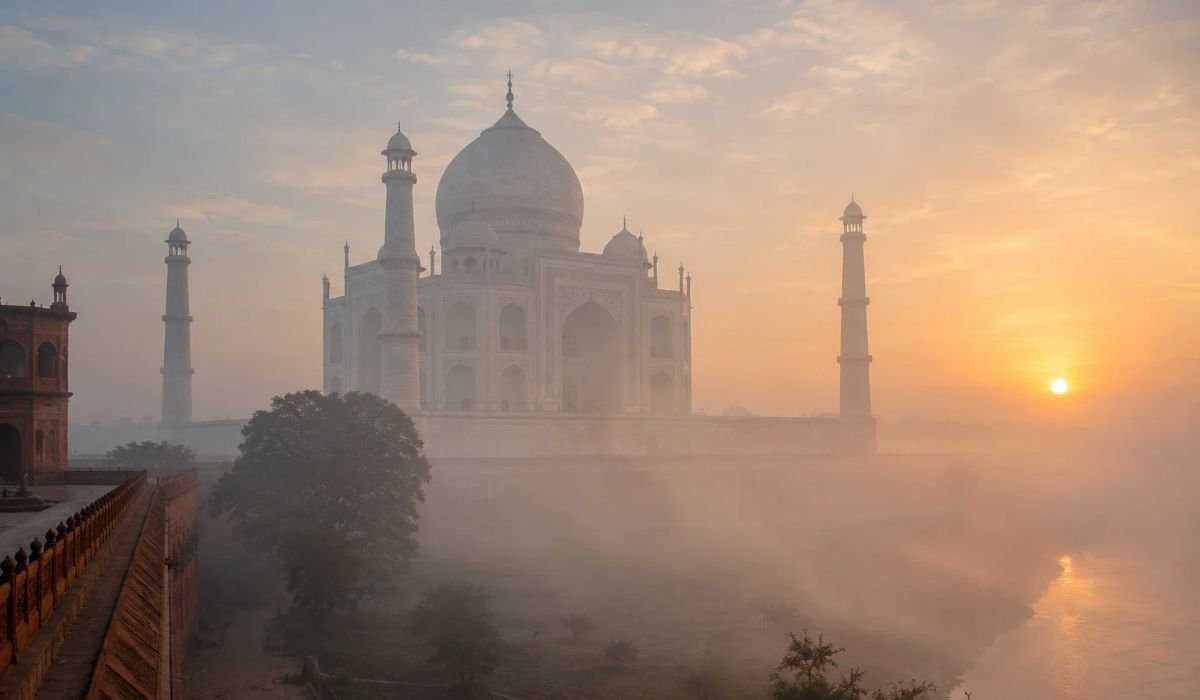
- 6:00 AM — Sunrise entry at the Taj Mahal (the cooler temperature and softer light make this the best time to visit)
- 8:30 AM — Breakfast near the East or West Gate
- 9:30 AM — Agra Fort
- 11:30 AM — Itimad-ud-Daulah (Baby Taj) if time permits
- 12:30 PM — Return to hotel or onward travel
This pace suits travelers doing a Same Day Agra Tour from Delhi, where train or road travel time needs to be factored into the schedule.
Suggested Full-Day Itinerary
For a more immersive day:
- 6:00 AM — Sunrise Taj Mahal visit
- 8:30 AM — Breakfast
- 9:30 AM — Agra Fort
- 11:00 AM — Itimad-ud-Daulah
- 12:30 PM — Lunch
- 2:00 PM — Drive to Fatehpur Sikri (approx. 40 minutes)
- 3:00 PM — Guided exploration of Fatehpur Sikri
- 5:00 PM — Mehtab Bagh for sunset views of the Taj Mahal across the river
- 6:30 PM — Return to hotel
Our lead travel expert, Mohd. Imran Khan, recommends this exact sequence for first-time visitors because it balances the two “must-see” monuments with two often-overlooked sites, while ending the day with one of the most photogenic sunset views in Agra.
Photography Tips
- Golden hour wins. Sunrise (around opening time) and the hour before sunset offer the softest light at the Taj Mahal.
- Avoid the “diamond bench” crowd rush. The famous photo bench has the longest queue mid-morning; visit early or be patient.
- Use the reflection pools strategically. Position low and slightly off-center for the most natural mirror effect.
- Check for restoration scaffolding. Periodic conservation work occasionally covers sections of the monument — a local guide will know current conditions before you travel.
- Mehtab Bagh for unobstructed wide shots. The far side of the river offers a clean, crowd-free composition unavailable from inside the main complex.
- Mind the tripod restrictions. Tripods are restricted in some zones for security reasons; a guide will know current rules.
Local Food Recommendations
- Petha — A translucent, sugar-soaked sweet made from ash gourd, considered Agra’s signature confection.
- Bedai and Jalebi — A popular breakfast combination of spiced fried bread with a side of sweet jalebi, found in local markets.
- Mughlai cuisine — Rich, slow-cooked curries reflecting the city’s Mughal culinary heritage, widely available in established restaurants.
- Street chaat — Savory snacks like tikki and golgappa, best enjoyed at well-reviewed, busy stalls (high turnover generally indicates freshness).
A guide can point you toward consistently clean, well-regarded establishments rather than tourist-trap restaurants with inflated prices and inconsistent quality.
Shopping Tips
- Marble inlay souvenirs are Agra’s specialty, but prices vary enormously between shops, and quality should always be verified before purchase.
- Avoid guide-recommended “cousin’s shop” detours unless it’s a reputable establishment you’ve researched independently — commission-based stops are a leading source of overpriced souvenirs.
- Bargaining is expected in local markets, though fixed-price government emporiums offer more reliable quality control.
- Leather goods and handicrafts are also commonly sold near tourist areas; check stitching and material quality carefully.
Entry Ticket Tips
- Book online in advance when possible to avoid counter queues.
- Carry a passport copy — foreign nationals require ID verification for ticketed entry.
- Separate fees apply for the main mausoleum at the Taj Mahal beyond the general entry ticket.
- Photography/videography permits for non-standard equipment (drones, professional video rigs) require separate authorization and advance approval.
- Friday closures apply to the Taj Mahal — plan your itinerary around this in advance.
Best Visiting Time
Concise Answer: The best time to visit Agra is between October and March, when daytime temperatures are mild. Within each day, sunrise (just after opening) offers the coolest temperatures, softest light, and smallest crowds.
- October–March — Pleasant weather, ideal for full-day sightseeing.
- April–June — Very hot (often exceeding 40°C/104°F); early morning visits are essential.
- July–September — Monsoon season; humid with intermittent rain, but fewer crowds and dramatic cloud-lit photography.
Based on over 22 years of guiding international travelers, the single most repeated piece of advice we give returning guests is: come early. Nearly every crowd-related complaint we’ve heard over the years traces back to a mid-morning or midday arrival.
Safety Tips
- Keep valuables secure and avoid displaying expensive camera equipment unnecessarily in crowded areas.
- Stay with your guide or group near monument entrances, where pickpocketing risk is highest due to dense crowds.
- Carry bottled water, especially during summer months.
- Use only registered taxis or vehicles arranged through your guide or hotel.
- Be cautious of unsolicited offers of help, food, or “free” tours near tourist sites.
Travel Etiquette
- Dress modestly at religious and heritage sites — shoulders and knees covered are generally appropriate.
- Remove shoes where required, particularly inside the Taj Mahal’s main mausoleum (or use provided shoe covers).
- Ask before photographing local people, particularly in markets or residential areas.
- Avoid public displays of affection at religious or heritage sites out of cultural respect.
- Tip guides and drivers modestly for good service — this is customary, though not mandatory.
Accessibility Information
- The Taj Mahal has ramps available for wheelchair access at the main entrance, though the marble platform surfaces can be uneven in places.
- Agra Fort involves significant walking and some steps; advance notice to your guide helps in planning a route with minimal strain.
- Golf-cart style transport is available from parking areas to the Taj Mahal’s main gates for travelers with mobility considerations.
- A private guide familiar with accessibility routes can significantly ease navigation compared to a self-guided visit.
Family Travel Tips
- Children generally respond well to story-based explanations rather than dense historical facts — a guide experienced with families adjusts accordingly.
- Morning visits work best for families to avoid heat and fatigue with young children.
- Carry snacks and water, as on-site food options near monuments are limited.
- Stroller access is limited in some areas due to uneven marble and stone surfaces; a baby carrier is often more practical.
Senior Traveler Tips
- Request a slower-paced itinerary in advance — a good guide will plan rest points without you needing to ask repeatedly.
- Golf-cart transport from parking to the Taj Mahal’s gates reduces walking distance considerably.
- Morning visits minimize heat exposure, which is particularly important for older travelers.
- Comfortable, supportive footwear is essential given the uneven historic stone surfaces at Agra Fort and Fatehpur Sikri.
Solo Traveler Tips
- A private guide provides an added layer of safety and orientation, particularly useful for solo travelers unfamiliar with local customs.
- Guides can assist with photography, since solo travelers often otherwise rely on strangers for photos.
- Solo travelers are sometimes more frequently approached by touts; a recognizable, booked guide reduces this significantly.
Luxury Traveler Tips
- Private, air-conditioned transport paired with a fluent, specialized guide creates a noticeably smoother experience than standard group logistics.
- Sunrise visits can be arranged with minimal wait times when properly coordinated in advance.
- For travelers seeking a more elevated experience, our Luxury India Tours combine private guiding with curated stays and premium transport throughout the Golden Triangle and beyond.
Transportation Tips
- Pre-arranged private vehicles are significantly more reliable than hailing transport near monument gates.
- Same-day travel from Delhi is most efficiently done by high-speed train (approximately 2 hours) followed by local transport.
- Traffic near the Taj Mahal’s gates can be heavy mid-morning; guides typically coordinate drop-off and pickup points to minimize walking through congestion.
- For multi-city itineraries, a Rajasthan Tour Packages plan often integrates Agra as a stop alongside Jaipur, Udaipur, and Jodhpur.
How Guides Improve the Experience
Bringing this all together, a guide’s real value isn’t reciting dates — it’s translating a monument into a story you’ll actually remember. Our local guiding experience suggests that travelers retain almost nothing from a self-guided, plaque-reading visit, but vividly remember stories, context, and personal anecdotes shared by a knowledgeable guide months or years later.
A guide also absorbs the logistical friction — tickets, security lines, vendor interactions, timing — so your attention stays on the monument in front of you rather than the next obstacle.
Meet Our Local Travel Expert
Mohd. Imran Khan is the senior private tour guide at Amsah Tours, with more than 22 years of experience guiding international travelers from the USA, UK, Canada, Australia, Europe, and beyond through Agra’s most significant heritage sites.
Over more than two decades on the ground, Imran has developed deep expertise in:
- Taj Mahal Tours — including architectural detail, optimal timing, and photography guidance
- Golden Triangle Tours — coordinating multi-city heritage itineraries across Delhi, Agra, and Jaipur
- Mughal History — political context behind Agra Fort, the Taj Mahal, and Fatehpur Sikri
- Indian Culture — etiquette, customs, and authentic local experiences for first-time visitors
- Heritage Interpretation — translating archaeological and architectural detail into accessible, engaging storytelling
- Personalized Private Tours — adapting pacing and depth for families, seniors, photographers, and luxury travelers
- Local Experiences — food, markets, and lesser-known viewpoints beyond the standard tourist circuit
Travelers consistently note that experienced local guidance like Imran’s transforms a rushed checklist of monuments into a coherent, memorable narrative — helping visitors avoid common pitfalls, manage crowds and timing intelligently, and leave Agra with a genuine understanding of what they saw, rather than just a set of photographs.
Frequently Asked Questions
Do I need a guide to visit the Taj Mahal?
No, a guide is not mandatory to enter the Taj Mahal, but it is highly recommended since the site has minimal on-site information and a layout that can be confusing for first-time visitors.
How do I know if a guide in Agra is licensed?
Licensed guides carry a government-issued identity card, usually displayed on a lanyard, issued by the Ministry of Tourism or the relevant state tourism department. Ask to see this ID before starting the tour.
Is it safe to hire a guide directly outside the Taj Mahal? I
t’s generally not advisable. Most legitimate, licensed guides are booked in advance through hotels, tour operators, or official guide associations rather than approaching tourists directly at the gate.
How much does a private guide in Agra typically cost?
Costs vary depending on tour duration, language requested, and group size. It’s best to confirm pricing directly and in advance with a licensed tour operator rather than negotiating on the spot.
Can I hire an English-speaking guide on short notice?
English-speaking guides are the most commonly available option in Agra and can often be arranged with relatively short notice, though booking a day or two ahead is recommended during peak season (October–March).
What languages besides English are available for guides in Agra?
Spanish, French, German, Italian, Japanese, Korean, Mandarin, and Russian-speaking guides are available, though advance booking is strongly recommended for less common languages.
Is the Taj Mahal closed on any day of the week?
Yes, the Taj Mahal is closed to visitors on Fridays due to prayers held at the adjacent mosque.
What is the best time of day to visit the Taj Mahal?
Early morning, around sunrise and opening time, offers the coolest temperatures, softest natural light for photography, and the smallest crowds.
What is the difference between a government-approved guide and a regular guide?
A government-approved guide has completed official certification through India’s tourism authorities and holds a valid ID card authorizing entry into protected monuments. Unlicensed individuals have no such certification or accountability.
Are private guides better than group tours for first-time visitors?
For most first-time visitors, yes — private guides offer personalized pacing, direct Q&A, and flexibility that large group tours typically cannot match.
What should I avoid when hiring a guide in Agra?
Avoid guides who approach you unsolicited near monument gates, anyone pressuring a shopping detour, and unusually low prices that seem inconsistent with standard, transparent rates.
Can a private guide help with photography at the Taj Mahal?
Yes, experienced guides know optimal angles, timing, and crowd patterns, and can help position shots that avoid common compositional and lighting issues.
Is Agra Fort worth visiting along with the Taj Mahal?
Yes, Agra Fort provides important political and historical context, including the story of Shah Jahan’s imprisonment within sight of the monument he built, making it a meaningful complement to the Taj Mahal visit.
How far is Fatehpur Sikri from Agra?
Fatehpur Sikri is located approximately 40 minutes by road from central Agra and is typically included in a full-day Agra itinerary.
Is a guide necessary for senior travelers or those with mobility concerns?
A guide is highly beneficial for senior travelers, as they can plan routes around uneven surfaces, arrange golf-cart transport where available, and pace the visit to reduce physical strain.
Are audio guides a good alternative to a private guide?
Audio guides are a lower-cost option but offer only fixed, one-way narration without the ability to ask questions, adjust pacing, or receive real-time crowd and photography guidance.
What is the best way to book a licensed guide in Agra?
The most reliable approach is booking in advance through an established tour operator, which verifies licensing and accountability rather than arranging a guide informally at the monument gate.
Can a private guide be combined with a multi-city tour like the Golden Triangle?
Yes, private guides are commonly arranged as part of Golden Triangle itineraries covering Delhi, Agra, and Jaipur, often with the same guide or coordinated handoffs between cities.
What should I wear when visiting Agra’s monuments?
Modest clothing covering shoulders and knees is recommended, along with comfortable, supportive footwear suitable for uneven historic stone and marble surfaces.
Is it customary to tip a private guide in Agra?
Tipping is customary, though not mandatory, and is generally appreciated as a gesture for good service.
Final Summary
Agra rewards travelers who plan ahead. A licensed, government-approved private guide removes the guesswork — verifying who’s trustworthy, navigating ticket lines, timing your visit around crowds and weather, and translating centuries of Mughal history into stories you’ll actually remember.
Whether you’re planning a quick Same Day Agra Tour, a more immersive Private Taj Mahal Tour, or combining Agra with Delhi and Jaipur on a Golden Triangle Tour, the right guide turns a checklist of monuments into a genuinely meaningful experience.
If you’re planning a trip to Agra and want a licensed, experienced private guide — for a family visit, a luxury itinerary, or a custom multi-day plan — reaching out to a reputable local operator in advance ensures the experience matches what you came to India to see.