Every year, millions of travelers make the journey to Agra, Uttar Pradesh, specifically to stand in front of the Taj Mahal — and many of them leave disappointed, exhausted, or out of pocket. Not because Agra isn’t worth it. It absolutely is. But because they walked in unprepared.
The most common tourist mistakes in Agra aren’t dramatic blunders — they’re small, avoidable planning gaps that compound quickly: booking the wrong hotel, arriving at the wrong time, trusting the wrong person, or simply trying to squeeze too much into too few hours. Most of these mistakes are completely preventable with a bit of advance knowledge.
This guide is designed to be the thing you read before you book your trip. Whether you’re coming from Delhi for a day, planning a longer itinerary, or visiting India for the first time, understanding these pitfalls will make your Agra experience significantly more enjoyable.
What Are the Most Common Tourist Mistakes in Agra?
The most common tourist mistakes in Agra include visiting on a Friday (when the Taj Mahal is closed), arriving too late in the day to beat the crowds, booking unreliable local transport without pre-arranging, ignoring prohibited items rules at monument security, falling for commission-based shopping traps, underestimating walking distances, visiting only the Taj Mahal and skipping the rest of the city, and leaving ticket booking to the last minute. With some simple advance planning, almost all of these are avoidable.
The 15 Most Common Mistakes — And How to Avoid Each One
Mistake #1: Visiting on a Friday Without Checking the Calendar
What happens: Travelers arrive at the Taj Mahal gate, often after a two-to-four-hour journey from Delhi, only to find the monument closed. The Taj Mahal is shut to tourists every Friday, reserved for prayers and maintenance.
Why it matters: This is arguably the most avoidable mistake in Agra. Yet it catches first-time visitors regularly, particularly those booking spontaneous or last-minute trips.
How to avoid it: Check your travel dates against a calendar before booking anything. If Friday falls during your Agra visit, simply shift your Taj Mahal visit to a different day. Other monuments like Agra Fort remain open on Fridays, so your itinerary can still be productive — just not at the Taj.
Always verify current official closure dates before visiting. Check the Archaeological Survey of India (ASI) website for the most up-to-date information.
Mistake #2: Arriving Mid-Morning Instead of at Sunrise
What happens: Travelers sleep in, have a leisurely breakfast, and arrive at the Taj Mahal around 9 or 10 AM. By that point, the soft golden light has gone, the temperature is climbing, and the queues at every gate are long.
Why it matters: Sunrise is genuinely the best window to experience the Taj Mahal — both photographically and practically. The marble takes on a warm, peachy tone in early light that it simply doesn’t have two hours later. Crowds are also significantly thinner in the first hour after opening.
How to avoid it: Plan to be at your chosen gate well before the monument opens. If you’re weighing whether an early start is worth it, the in-depth comparison of Taj Mahal sunrise vs sunset explains exactly what changes between the two visits and why experienced travelers almost always recommend the morning. It requires an early wake-up, but it consistently rates as one of the highlights of an India trip.
Mistake #3: Treating Agra as a Half-Day Tick-Box
What happens: Travelers plan a rushed Delhi-Agra-Delhi day trip — a journey that eats four to six hours of road travel alone. They arrive at noon, dash through the Taj Mahal, and leave before sunset, never having seen Agra Fort, Mehtab Bagh, or the city’s remarkable local culture.
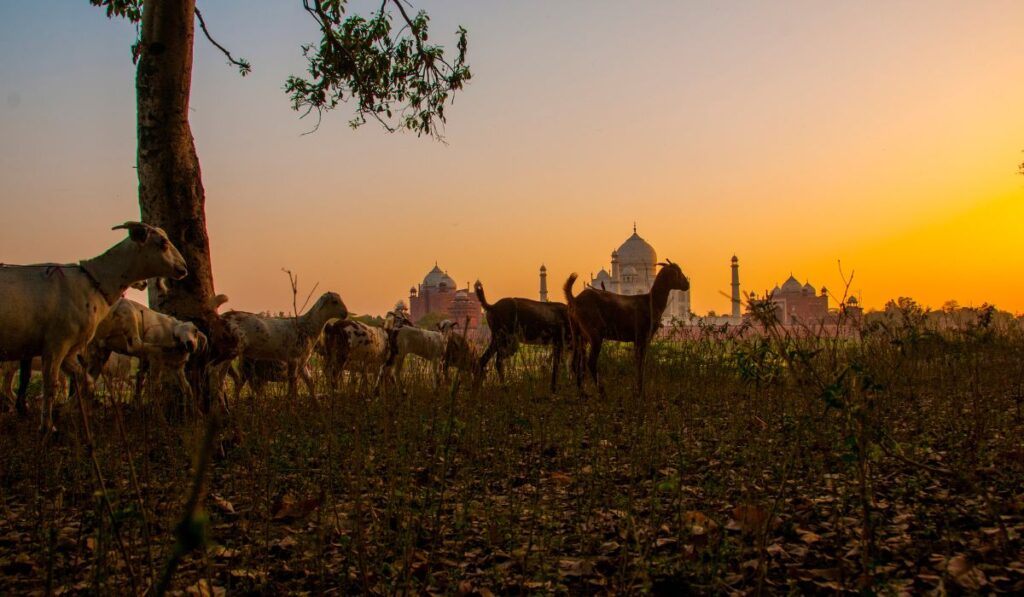
Why it matters: Agra has far more to offer than a single monument. Agra Fort is a UNESCO World Heritage Site in its own right. Mehtab Bagh offers an unobstructed sunset view of the Taj Mahal from across the Yamuna River that most visitors never experience. Itmad-ud-Daulah — sometimes called the “Baby Taj” — features extraordinarily detailed marble inlay work in a far quieter setting.
How to avoid it: If at all possible, stay at least one night in Agra. A two-day itinerary allows you to see the Taj Mahal at sunrise, explore Agra Fort in the morning, and add Mehtab Bagh or Fatehpur Sikri without feeling rushed. The difference between a same-day and an overnight visit isn’t just a few extra hours — it’s an entirely different quality of experience.
Planning a Hassle-Free Private Tour of Agra?
Make your Agra visit easier with thoughtful planning, reliable local guidance, and a personalized itinerary covering the Taj Mahal, Agra Fort and other highlights. Get local assistance from experienced Agra tour guide Mohd. Imran Khan.
Plan My Agra TourMistake #4: Underestimating Travel Time and Agra’s Traffic
What happens: Travelers budget 30 minutes to get between attractions, not accounting for Agra’s notoriously dense traffic, particularly around the Taj Mahal’s pedestrian-restricted zones, which require battery-operated vehicles or significant walking.
Why it matters: The areas immediately surrounding the Taj Mahal have strict vehicle restrictions to protect the monument from air pollution. Getting from the car park to any of the three main gates involves a walk or a short electric vehicle ride. Factor this into every leg of your day.
How to avoid it: If you’re arriving by train, the journey from Agra Cantt station to the Taj Mahal involves more variables than most first-timers expect. The complete Agra Cantt to Taj Mahal travel guide covers every realistic transport option, approximate journey times, and what to watch out for on the way. Budget an extra 20–30 minutes for each major transit. In Agra, tighter schedules lead to frustration.
Mistake #5: Trusting Unsolicited Guides and Commission Drivers
What happens: A friendly stranger at the train station, at the hotel, or outside the Taj Mahal gates offers to be your guide, show you the “real Agra,” or drive you around for a surprisingly low fare. The actual plan is to route you through carpet shops, marble emporiums, or overpriced souvenir stores, each of which pays the “guide” a commission.
Why it matters: This is the single most pervasive scam pattern in Agra. It’s not violent or dangerous — it’s a slow drain on your time and money. Drivers who take you to three shopping stops before the Taj Mahal are not being kind; they’re being paid to do it.
How to avoid it: Arrange transport through your hotel or a pre-vetted travel company before you arrive. If hiring a local guide, only work with a verified, licensed professional — the guide to finding the best tourist guide in Agra explains exactly what credentials to look for and how to verify them. Be direct: tell any driver or guide upfront that you are not interested in any shopping stops.
Why Local Expertise Makes a Real Difference in Agra
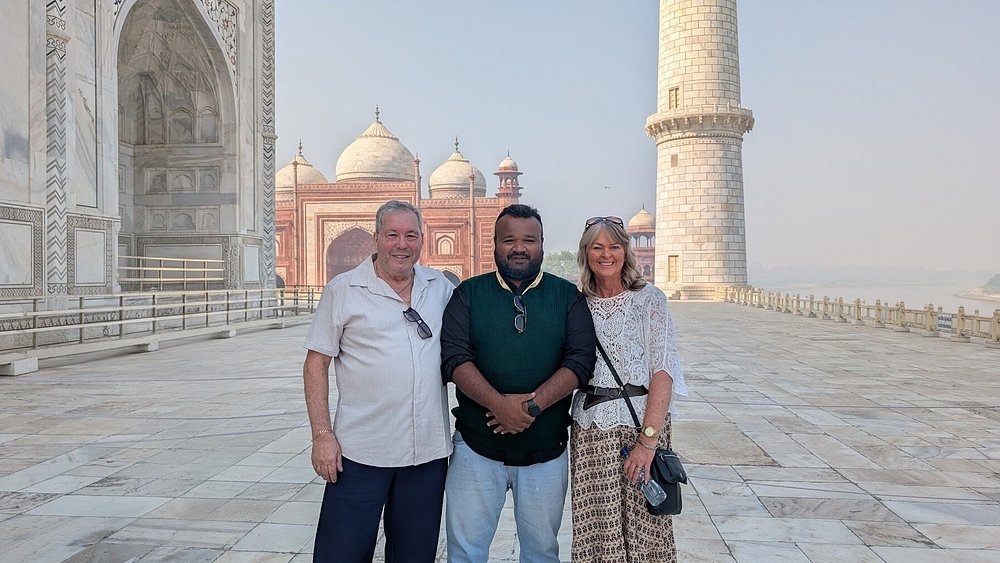
Knowing what to avoid in Agra is one thing. Knowing how to navigate the city confidently on the day — the right entry gates, the realistic time each monument actually takes, the quieter corners most visitors walk straight past — is where genuine local knowledge earns its value.
First-time visitors often underestimate how much a well-informed, experienced guide changes the quality of their day. Not just as someone who explains history, but as someone who helps you pace your visit sensibly, steers you away from time-wasting distractions, and makes the whole experience feel less chaotic.
At Amsah Tours, tourist guide Mohd. Imran Khan brings close to 22 years of experience in travel and tourism to every visit he leads. Over that time, he has worked with travelers from many different countries and backgrounds — each arriving with different expectations, schedules, and questions. That breadth of experience means he understands not just Agra, but how first-time visitors actually experience it, which is often quite different from how it looks on a map or an itinerary.
Mistake #6: Carrying Prohibited Items Into the Taj Mahal
What happens: Travelers pack their full-sized camera bags, tripods, selfie sticks, food, tobacco, large power banks, or chargers and are stopped at security. They either have to surrender the items at a cloakroom (and retrieve them later, which takes time) or return to their vehicle.
Why it matters: Security at the Taj Mahal operates similarly to airport-level checks. Long security queues slow down considerably when travelers ahead are dealing with prohibited items. It wastes everyone’s time — including yours.
How to avoid it: Travel light. Before your visit, review the complete Taj Mahal banned items list to understand exactly what is and isn’t permitted at the gate — the list includes some items that frequently surprise first-time visitors. Carry your phone or camera, a small water bottle, your ID, and your entry ticket. Leave everything else in your hotel room or vehicle.
Mistake #7: Skipping Advance Ticket Booking
What happens: Travelers assume they can simply turn up and buy a ticket at the counter. During peak season, the queues at ticket windows can be substantial, and the early-morning window — when you most want to be inside — is precisely when demand is highest.
Why it matters: Every minute standing in a ticket queue is a minute the light is changing inside the monument. Online booking removes one more stressful variable from your morning.
How to avoid it: Book tickets through the official ASI booking portal ahead of time. Even booking the evening before your visit can save considerable time. Verify the official booking platform before your trip, as third-party sites can charge significantly inflated prices.
Mistake #8: Choosing Accommodation Based Purely on Price
What happens: Travelers book the cheapest available room without considering location. A hotel that appears close on a map might be on the far side of the city from the Taj Mahal, adding 45 minutes of travel to every early morning visit.
Why it matters: For a sunrise visit, your hotel’s location directly determines whether a 5:30 AM wake-up is manageable or brutal. A poorly located budget hotel can effectively make a sunrise Taj Mahal visit impractical.
How to avoid it: Look for accommodation in the Taj Ganj area or along the South Gate road for the shortest walking distance to the Taj Mahal. Balance price with location — a slightly more expensive, well-placed hotel often saves money in transport costs and stress.
Mistake #9: Ignoring Agra’s Seasonal Weather
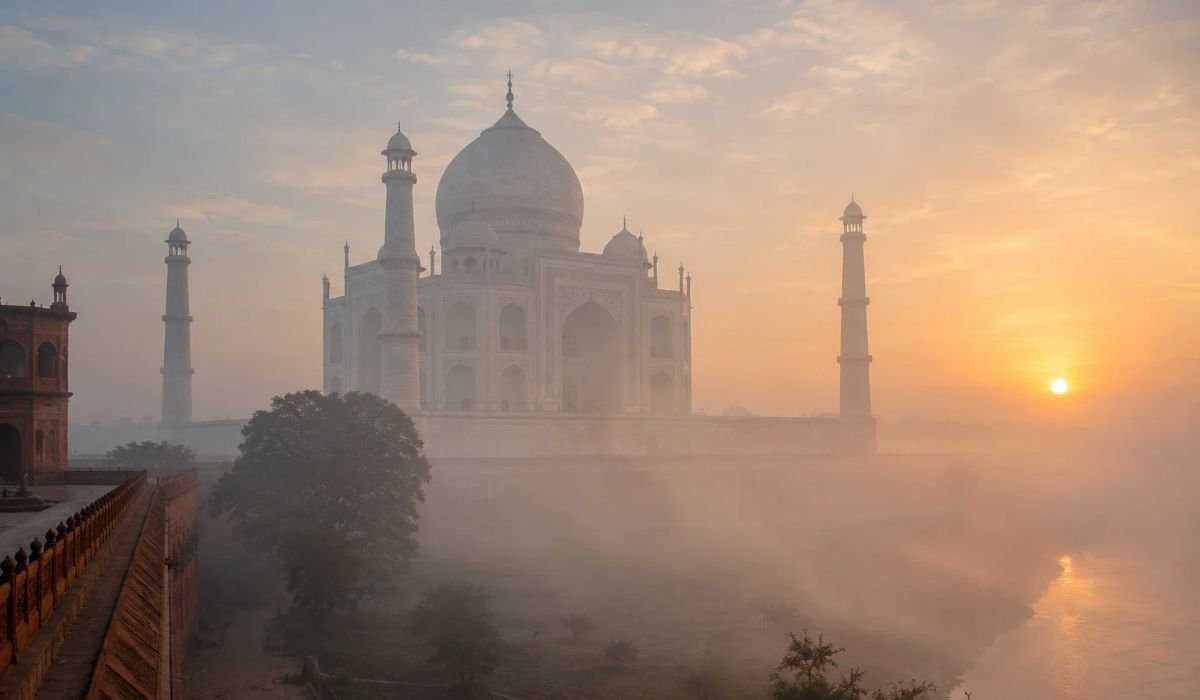
What happens: Travelers visit in May or June without preparing for the reality that daytime temperatures in Agra can exceed 40°C–45°C. Others plan a December or January visit without knowing that dense morning fog is common — occasionally thick enough to completely obscure views of the Taj Mahal.
Why it matters: Summer heat turns a two-hour monument walk into an ordeal. Winter fog can mean arriving at sunrise and seeing nothing but a white haze where the Taj Mahal should be.
How to avoid it: November through early March is the most reliable window for comfortable weather and clear skies, with the caveat that fog is possible in January. Check local forecasts daily during foggy season and be mentally prepared. Summer visitors should plan all sightseeing for the very early morning.
Mistake #10: Wearing the Wrong Footwear
What happens: Travelers wear flip-flops, sandals with poor grip, or brand-new shoes they haven’t broken in. Monument visits in Agra involve walking significant distances across marble, sandstone, uneven paths, and garden gravel. At several sections inside the Taj Mahal, shoes must be removed or replaced with cloth overshoes (often provided with entry).
Why it matters: Marble surfaces can be unexpectedly slippery, especially in warmer weather. Blisters from new shoes, or sore feet from flat sandals, can cut a day of sightseeing short.
How to avoid it: Wear well-fitted, broken-in, flat-soled shoes that slip on and off easily. Comfortable walking shoes or trainers are ideal. If you’re prone to foot fatigue, bring insoles.
Mistake #11: Assuming the Taj Mahal Will Be Empty
What happens: Travelers arrive expecting a serene, crowd-free experience — the kind of thing they’ve seen in carefully timed photographs. During peak season (especially October through March), the Taj Mahal can be extremely busy, with significant numbers of both domestic and international tourists.
Why it matters: Unrealistic expectations lead to disappointment. Accepting that reality helps you plan around it rather than against it.
How to avoid it: Arrive as early as possible. Weekday mornings see fewer crowds than weekends. Explore the full complex — the side pavilions, the gardens, the riverfront platform — rather than spending all your time in front of the central dome. A busy Taj Mahal is still the Taj Mahal.
Mistake #12: Eating Carelessly Without Checking Hygiene Standards

What happens: Travelers eat at random street stalls near major tourist attractions, or eat at restaurants recommended by their commission-driven guide, ending up either unwell or significantly overcharged.
Why it matters: An upset stomach on a day packed with monument visits is a miserable experience. Equally, guide-recommended restaurants often operate on a tourist-pricing model disconnected from local norms.
How to avoid it: Look for busy local restaurants rather than empty ones near tourist entry points. Ask your hotel which restaurants they genuinely recommend. Agra has excellent local food — petha (a sweet made from ash gourd), bedai with sabzi (a popular local breakfast), and dalmoth (a savory snack) are all worth seeking out.
Mistake #13: Buying Souvenirs at the First Shop You’re Taken To
What happens: Travelers enter a marble handicraft shop after their driver suggests it’s “famous” or “fixed price.” They make purchases at prices several times higher than the same items available in Kinari Bazaar or Sadar Bazaar.
Why it matters: Agra is known for its marble inlay work (pietra dura), and the quality ranges widely. First-impression tourist shops near monuments are generally the most expensive option.
How to avoid it: Explore markets like Kinari Bazaar or Sadar Bazaar independently. Bargaining is expected and normal. If a shop is attached to your transport arrangement, treat that as a red flag. Buy only what genuinely appeals to you, and don’t feel pressured by high-pressure sales tactics.
Mistake #14: Missing Photography Rules Inside the Mausoleum
What happens: Travelers pull out their cameras inside the main mausoleum chamber and are immediately stopped by security. Photography is strictly prohibited inside the inner chamber of the Taj Mahal. On the wider complex grounds, general photography is permitted, but drones are completely banned.
Why it matters: Arguments with security guards waste time and create stress. Drone violations are treated seriously.
How to avoid it: Understand the site rules before entering. You can photograph the monument freely from the gardens and outer platforms. Save the interior for your eyes alone — the detail inside the mausoleum is extraordinary, and experiencing it without a screen between you is genuinely worthwhile.
Mistake #15: Skipping Fatehpur Sikri If Time Allows
What happens: Travelers visit the Taj Mahal and Agra Fort and head home, never knowing that Fatehpur Sikri — a largely intact 16th-century Mughal capital abandoned shortly after its construction — lies roughly an hour’s drive from Agra.
Why it matters: Fatehpur Sikri is a UNESCO World Heritage Site and one of the most complete examples of Mughal city planning in existence. It’s far less crowded than either of Agra’s headline sites, and it offers a completely different architectural atmosphere.
How to avoid it: If you have two days in Agra, allocate a morning to Fatehpur Sikri. It works well as a half-day excursion with an early start. Plan timings and tickets in advance, as the site is an hour outside the city.
Planning a Hassle-Free Private Tour of Agra?
Make your Agra visit easier with thoughtful planning, reliable local guidance, and a personalized itinerary covering the Taj Mahal, Agra Fort and other highlights. Get local assistance from experienced Agra tour guide Mohd. Imran Khan.
Plan My Agra TourHow to Avoid Common Mistakes on Your Agra Trip
A good Agra visit comes down to a handful of fundamentals:
- Plan before you arrive. Know your dates, check the closure day, book tickets online, and arrange reliable transport in advance.
- Protect your morning. The early hours are your most valuable time at the Taj Mahal. Don’t waste them on queues, shopping detours, or late starts.
- Choose transport carefully. Pre-arranged taxis or hotel-recommended drivers are almost always safer than accepting offers from strangers at stations or tourist sites.
- Dress sensibly. Comfortable shoes, modest clothing, and weather-appropriate layers make a significant difference to your stamina.
- Eat smart. Try local food from busy, established restaurants. Avoid anything attached to your driver’s recommendations.
- Shop on your own terms. Visit Kinari Bazaar or Sadar Bazaar independently. Bargain confidently.
- Stay hydrated. Carry water. Agra’s weather can be extreme in both summer and winter.
- Carry your ID. A valid government ID or passport is required at some monument security checks.
Agra Travel Tips for First-Time Visitors
A few additional tips that go beyond avoiding mistakes:
- Spread your monuments across your itinerary. Taj Mahal in the morning, Agra Fort in the late morning or afternoon, Mehtab Bagh at sunset — this sequence makes geographic and atmospheric sense.
- The best Taj Mahal view you haven’t planned for is probably from Mehtab Bagh. Across the Yamuna River, these gardens offer a sunset silhouette of the Taj that is unlike any view from inside the complex.
- Itmad-ud-Daulah is perfect for those who prefer a quieter experience. The marble inlay craftsmanship here arguably rivals the Taj Mahal, with a fraction of the crowds.
- Give yourself permission to be flexible. If the fog rolls in, or a monument is busier than expected, having a Plan B activity keeps the day from feeling like a failure.
- Pay by cash or card, but carry small denominations. Smaller vendors near monuments often struggle to make change for large notes.
- Learn a few phrases in Hindi. Even basic courtesies go a long way in creating a more genuine local experience.
How to Plan a Hassle-Free 1-Day Agra Trip
A realistic single-day Agra itinerary is possible, but it requires accepting some trade-offs. Here’s a logical sequence:
Pre-Dawn (Before Sunrise): Leave your base early enough to arrive in Agra by sunrise, or stay overnight and be at the gate 15–20 minutes before the monument opens.
Sunrise to Mid-Morning: Taj Mahal Enter through your chosen gate (East, West, or South — all lead to the same complex) and spend two to two-and-a-half hours inside the grounds. Walk around the reflecting pool. Take your time with the main platform and the mausoleum exterior. See the interior. Explore the mosque and guest house on either side.
If you’d rather leave the logistics to someone who knows the city well, Amsah Tours’ same-day Taj Mahal tour by car handles transport, entry, and local guidance — letting you focus entirely on the experience rather than the planning.
Late Morning to Midday: Agra Fort The Fort is about two kilometers from the Taj Mahal — a short drive or auto-rickshaw ride. It takes two to three hours to explore properly. The views of the Taj Mahal from its Musamman Burj tower are genuinely moving.
Midday: Lunch and Rest Midday is the worst time to be outside in Agra for most of the year. Use it strategically — sit down, eat properly, rest your feet.
Afternoon: Optional Itmad-ud-Daulah or Mehtab Bagh If your schedule and energy allow, a short visit to either of these monuments rounds out the day beautifully. Mehtab Bagh is particularly worthwhile in the late afternoon as the Taj Mahal catches the setting sun across the river.
Frequently Asked Questions About Visiting Agra
What are the most common tourist mistakes in Agra?
The most common mistakes are visiting on a Friday (when the Taj Mahal is closed), arriving too late in the morning to beat the crowds, trusting commission-based drivers or unsolicited guides, carrying prohibited items into monument security, and leaving ticket booking to the last minute. Planning ahead solves most of these.
What should I avoid when visiting the Taj Mahal?
Avoid bringing prohibited items such as tripods, selfie sticks, food, tobacco, and large bags. Do not photograph inside the main mausoleum chamber. Do not trust strangers offering “official” guide services without valid ASI credentials. Always verify the current rules before your visit, as guidelines can be updated.
Is one day enough for Agra?
One day is possible but limiting. You can visit the Taj Mahal and Agra Fort in a single well-organized day, but you will need to skip smaller monuments like Itmad-ud-Daulah, Mehtab Bagh, and Fatehpur Sikri. Two days allows a genuinely unhurried experience. If you have only one day, prioritize a sunrise Taj Mahal visit and an afternoon at Agra Fort.
What is the best time to visit the Taj Mahal?
Early morning, ideally at or just after the monument opens, gives you the softest natural light and the smallest crowds. The wider best-time-of-year window is November through early March for pleasant weather. Be aware that heavy fog is possible in December and January. Always check local weather forecasts before your visit.
Should I book Agra sightseeing in advance?
Yes. Booking Taj Mahal entry tickets online in advance is strongly recommended, especially during peak season (October to March). Pre-arranging transport and a licensed guide is also advisable. Walking in without a plan is where most of the problems begin.
What should I carry when visiting the Taj Mahal?
Carry your valid ID or passport, your pre-booked entry ticket (printed or digital), a small water bottle, your phone or camera (without a tripod or selfie stick), sunscreen, and comfortable walking shoes that slip on and off easily. Travel light — security checks are faster when you’re not carrying excess items.
Is Agra safe for first-time visitors?
Agra is generally safe for tourists. The most common issues are non-violent: commission-based scams, overcharging, and persistent touts. Stay aware, pre-arrange your transport and accommodation, stick to established eating places, and trust your instincts when something feels off.
How can I avoid tourist scams in Agra?
Pre-arrange everything before you arrive. Book transport through your hotel or a reputable company. Only work with a licensed guide who can show valid ASI credentials. Never accept guide services from someone who approaches you unsolicited. In markets, bargaining is expected — the first price quoted is rarely the best one.
Which places should I visit in Agra besides the Taj Mahal?
Agra Fort is the most important second stop — a UNESCO site and a living piece of Mughal military and court history. Mehtab Bagh is essential for a sunset view of the Taj Mahal from across the Yamuna. Itmad-ud-Daulah (the Baby Taj) is beautiful, far less crowded, and historically significant. Fatehpur Sikri, about an hour outside the city, is a remarkable detour if you have two days.
How much walking is involved in Agra sightseeing?
More than most people expect. Inside the Taj Mahal complex alone, you’ll cover two to three kilometers depending on how thoroughly you explore. Agra Fort involves substantial walking across uneven sandstone surfaces. Combined with transit and market visits, a full day of Agra sightseeing typically means six to ten kilometers on foot. Wear comfortable shoes from the start.
Final Thoughts: Make Your Agra Visit Count
The common tourist mistakes in Agra all share the same root cause: underestimating how much preparation this city rewards. Agra isn’t a place you can successfully improvise your way through — not if you want to experience it rather than just survive it.
Plan your dates carefully. Book your tickets early. Arrange transport you can trust. Dress for the weather and the walking. Eat where the locals eat. Stay long enough to see more than just the Taj Mahal.
The Taj Mahal is genuinely one of the most extraordinary things built by human hands. Agra Fort, Mehtab Bagh, Itmad-ud-Daulah, and Fatehpur Sikri are each remarkable in their own right. The city’s food and markets are worth exploring. None of that requires a huge budget or a complex itinerary — it just requires a bit of thought before you arrive.
Check current entry rules, ticketing procedures, and opening hours through official sources before your visit, as these details change periodically. Then plan well, go early, and give Agra the time it deserves.