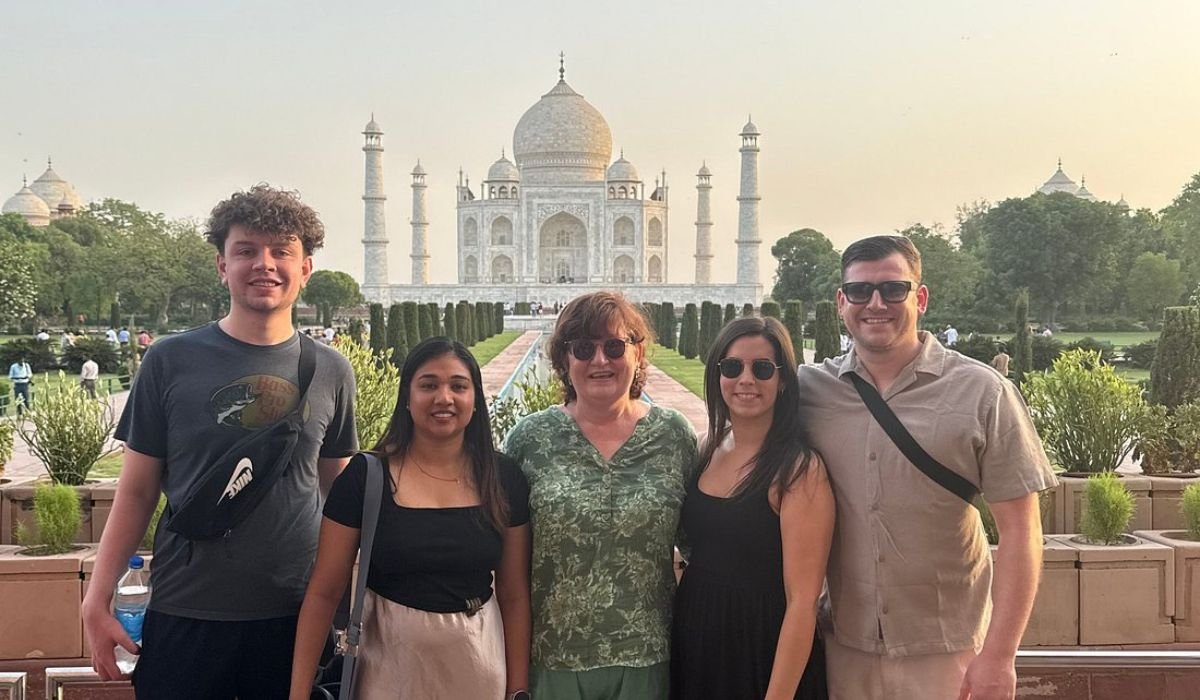
Agra gets over six million visitors a year, and almost every one of them walks away with a different opinion about their guide. Some had a guide who turned the Taj Mahal into a living story. Others got stuck with someone rushing through a script, checking their phone between stops. The difference between those two experiences almost always comes down to one thing: who you hired.
Quick Answer: The best tourist guide in Agra is a government-licensed, English-speaking professional with years of hands-on experience at the Taj Mahal, Agra Fort, and other Mughal-era sites. Look for an official ASI or Uttar Pradesh Tourism ID card, genuine storytelling ability, punctuality, and a guide who tailors the tour to your interests rather than reciting a fixed script.
Hiring a guide in Agra isn’t just about avoiding getting lost. It’s about understanding why Shah Jahan built the Taj Mahal the way he did, what the carvings on Agra Fort’s walls actually mean, and how to skip the chaos at the entry gates. A good guide turns a monument visit into a memory. This guide walks you through everything you need to know before you book one.
Quick Answer Box
- Who should you hire? A licensed, experienced, English-speaking guide with verifiable credentials.
- Where do you verify a license? Through the Archaeological Survey of India (ASI) or Uttar Pradesh Tourism registration.
- What’s the average cost? Roughly ₹800–₹2,500 for a half-day tour, more for full-day or private itineraries.
- Should you book in advance? Yes, especially during peak season (October to March).
- Private or group tour? Private guides offer flexibility and personal attention; group tours cost less but move on a fixed schedule.
Looking for the Best Tourist Guide in Agra?
Talk to Mohd. Imran Khan Today.
Chat with Mohd. Imran Khan
Why Trust This Guide
This guide draws on practical insights from an Agra-based tourist guide with over 22 years of experience helping travelers explore the city. The advice here reflects real-world experience assisting thousands of domestic and international visitors, not generic travel tips pulled from unrelated sources.
The article combines local, on-the-ground knowledge with current travel practices to help you make an informed decision when choosing a tourist guide in Agra. Where relevant, official sources such as the Archaeological Survey of India (ASI), the Official Taj Mahal website, and Uttar Pradesh Tourism are referenced for visitor information and guidelines. This content is reviewed periodically to stay accurate and useful.
Why Hiring the Best Tourist Guide in Agra Matters
Short answer: A guide turns a monument into a story, protects you from touts and overcharging, and saves you hours of confusion at the gates.
Agra’s monuments are old, layered, and full of details that mean nothing without context. Walk into Agra Fort alone and you’ll see red sandstone walls and a few signboards. Walk in with a knowledgeable guide and you’ll learn why Shah Jahan spent his final years imprisoned there, staring across the Yamuna River at the tomb he built for his wife.
There’s also a practical side. Agra’s ticket counters, security lines, and shoe-cover stalls near the Taj Mahal can be overwhelming for first-time visitors. A guide who knows the entry gates, the quietest photo spots, and the fastest queues saves you real time — sometimes an hour or more during peak season.
And then there’s the trust factor. Independent travelers, especially solo women and families, often get approached by unlicensed “guides” near the monument gates who inflate prices or push shopping detours. A government-authorized guide doesn’t need to do any of that — their income comes from doing the job well, not from commissions.
Qualities of a Great Tourist Guide
Short answer: Licensing, communication skills, storytelling ability, punctuality, and genuine local knowledge separate great guides from average ones.
Here’s what to actually look for:
- Valid license — issued by ASI or Uttar Pradesh Tourism, usually shown as a laminated ID card with a photo.
- Strong communication — not just fluent English, but the ability to explain history in a way that’s engaging, not memorized.
- Punctuality — Agra’s heat and crowds make timing matter; a good guide plans around both.
- Adaptability — willing to slow down for photographers, speed up for families with kids, or go deeper into history for enthusiasts.
- Transparency on pricing — no last-minute “extra charges” or pressure to visit a specific shop.
- Genuine passion — the guides travelers remember are the ones who clearly love what they do.
Key Takeaways
- A license alone doesn’t guarantee a great guide — communication and adaptability matter just as much.
- The best guides customize the tour instead of running a fixed script.
Government Approved vs Private Guide
Short answer: Government-approved guides are officially licensed and vetted; private guides may or may not be licensed, so it’s worth confirming credentials either way.
| Feature | Government Approved Guide | Private Guide |
|---|---|---|
| Licensing | Verified by ASI/UP Tourism | Varies — always check credentials |
| Pricing | Generally fixed/regulated | Can vary, sometimes negotiable |
| Availability | Assigned or booked in advance | Often booked directly through agencies |
| Personalization | Standard tour structure | Can be more flexible |
| Best for | First-time visitors wanting reliability | Travelers wanting a tailored experience |
Many experienced guides in Agra hold official licenses and work privately, giving travelers the best of both. If you want a fully vetted, verified option, look specifically for a licensed tourist guide rather than someone who simply says they’re “certified.”
English-Speaking Tour Guide
Short answer: For international travelers, an English-speaking guide isn’t a luxury — it’s essential for understanding historical context and asking questions freely.
A common mistake first-time visitors make is assuming any guide can communicate well in English. In practice, fluency varies a lot. The best guides don’t just speak English — they explain Mughal history, architecture terms, and cultural context in a way that actually lands with a foreign audience.
If you’re traveling from the US, UK, Australia, or anywhere else where English is your primary language, it’s worth specifically requesting an English-speaking tour guide in Agra rather than assuming this by default. This matters even more for older travelers or those with hearing difficulty, where accent clarity makes a real difference.
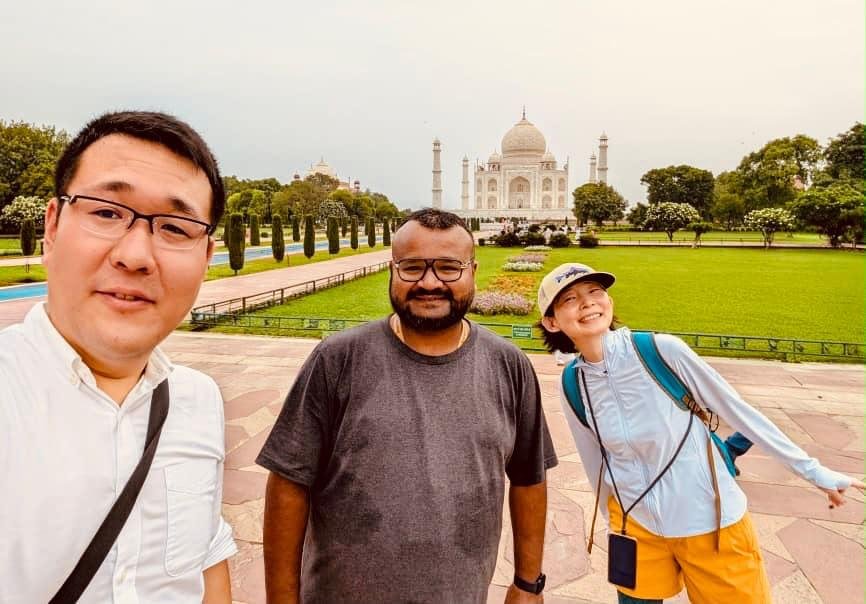
Best Places a Guide Can Cover
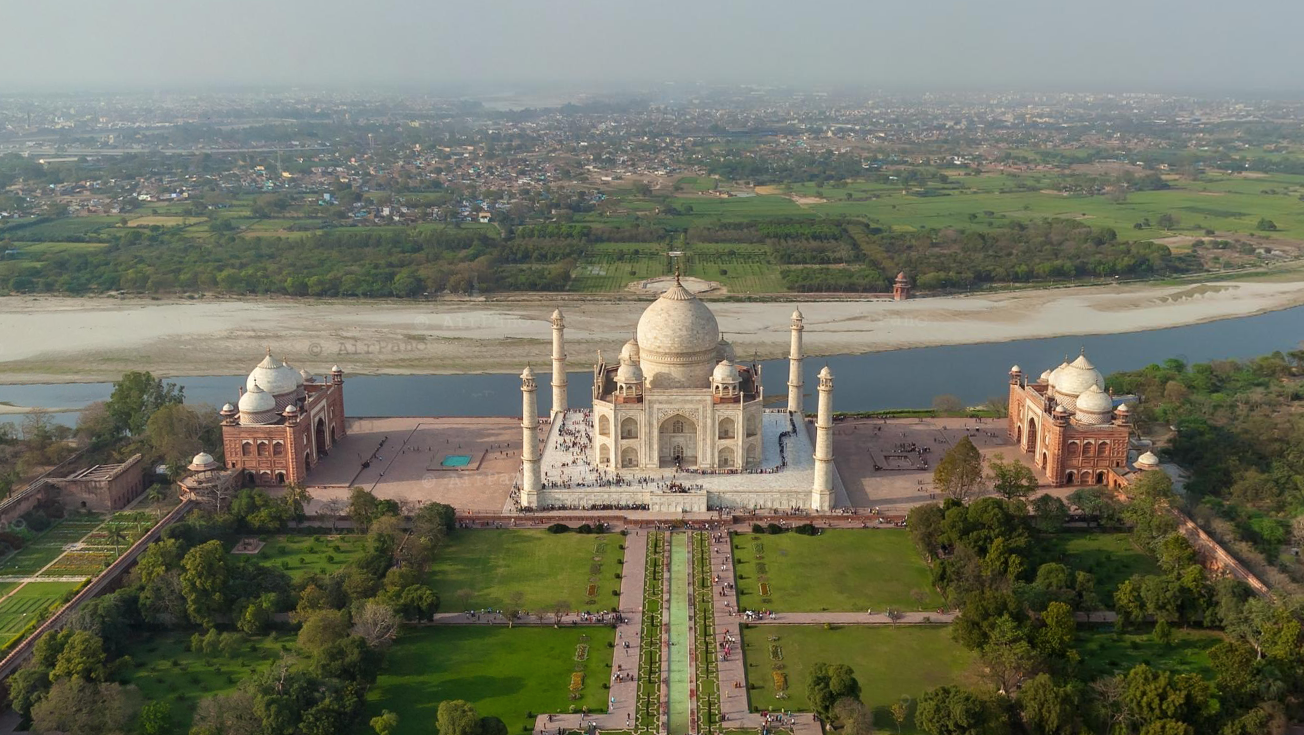
Short answer: A well-rounded Agra guide should be able to take you through the Taj Mahal, Agra Fort, Itmad-ud-Daulah, and Mehtab Bagh — each offering a different angle on Mughal history.
- Taj Mahal — the centerpiece, built by Shah Jahan as a mausoleum for his wife Mumtaz Mahal. A guide’s explanation of the symmetry, calligraphy, and inlay work is where the monument really comes alive.
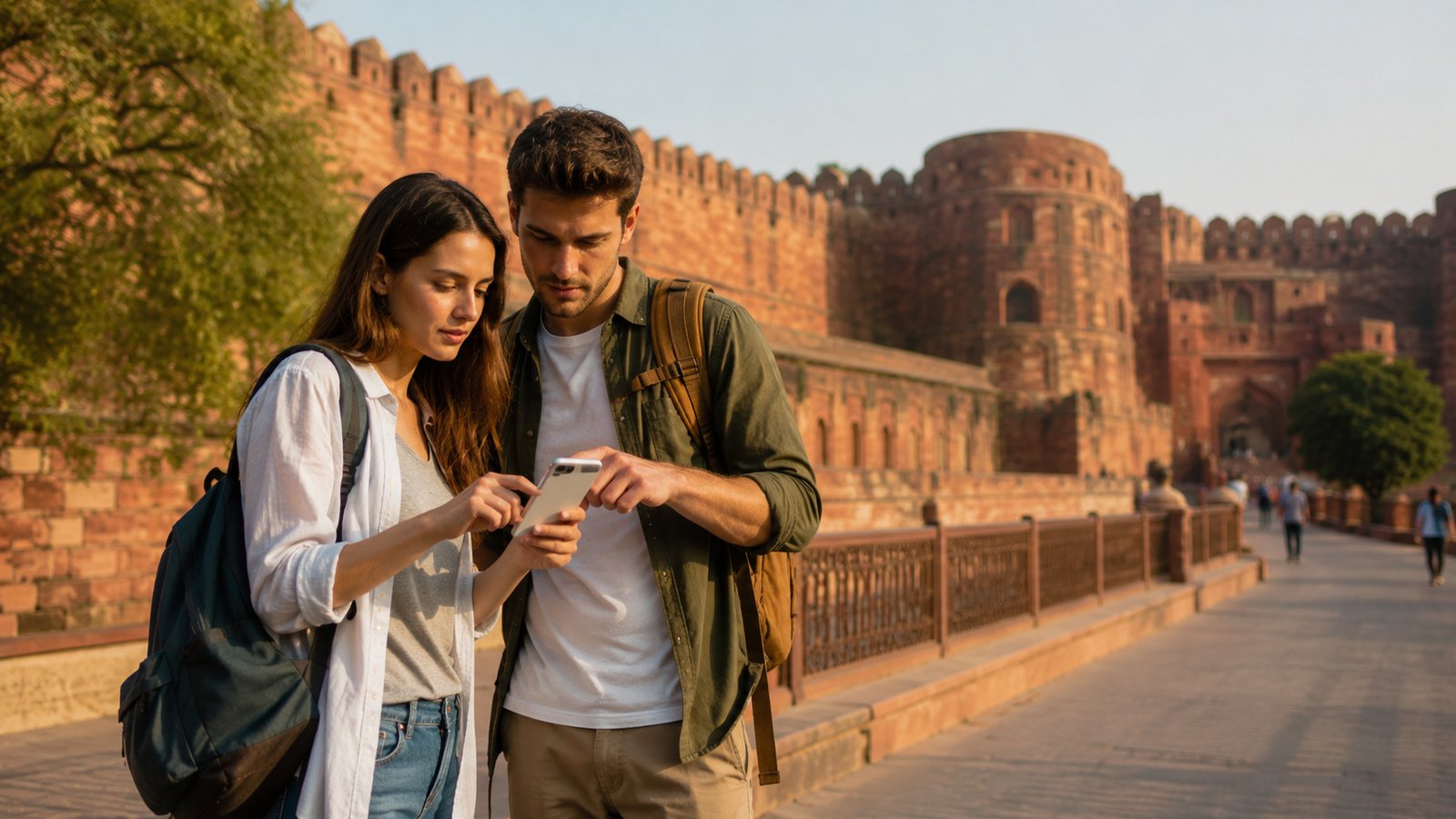
- Agra Fort — the Mughal Empire’s political seat for generations, and the site where Shah Jahan spent his final years.
- Itmad-ud-Daulah (Baby Taj) — often called a “draft” for the Taj Mahal’s design, and far less crowded, making it a favorite among history lovers.
- Mehtab Bagh — a garden across the river offering the best sunset view of the Taj Mahal, and a favorite stop for photographers.
A guide who can weave these four sites into one narrative — rather than treating them as separate stops — gives you a much richer picture of Mughal history than any single visit could.
Looking for the Best Tourist Guide in Agra?
Talk to Mohd. Imran Khan Today.
Chat with Mohd. Imran Khan
Private Guide vs Group Tour
Short answer: Private guides offer flexibility and personal attention; group tours are more affordable but run on a fixed pace and schedule.
| Feature | Private Guide | Group Tour |
|---|---|---|
| Cost | Higher per person | Lower per person |
| Pace | Fully flexible | Fixed by the group |
| Personalization | High — tailored to your interests | Limited |
| Best for | Families, couples, luxury travelers | Budget travelers, solo backpackers |
| Photo opportunities | More time and better positioning | Limited due to group size |
Families and couples generally get more value from a private guided tour, since the pace can adjust around kids, elderly travelers, or photography stops. Solo travelers on a tighter budget often do fine with a group tour, as long as expectations about pace and personalization are set beforehand.
Guide Pricing Explained
Short answer: Half-day guide charges in Agra typically range from ₹800–₹1,500, with full-day tours costing ₹1,500–₹2,500, depending on group size and itinerary.
| Tour Type | Approximate Price Range | Duration |
|---|---|---|
| Half-Day Guide | ₹800 – ₹1,500 | 3–4 hours |
| Full-Day Guide | ₹1,500 – ₹2,500 | 6–8 hours |
| Private Custom Tour | ₹2,000+ | Flexible |
Prices vary based on season, group size, and whether transport is included. Peak season (October–March) tends to push rates slightly higher due to demand. For a full pricing breakdown, including what’s typically included versus billed separately, it’s worth reading a dedicated guide on tourist guide fees before you book.
Key Takeaways
- Always confirm whether entry tickets and transport are included in the quoted price.
- Be cautious of guides quoting unusually low rates near monument entrances — this is a common overcharging tactic.
How to Choose the Right Guide
Short answer: Check for a valid license, read recent reviews, confirm pricing upfront, and book at least a day in advance during peak season.
- Verify the license — ask to see an official ID card before starting the tour.
- Read recent reviews — focus on reviews from the last 6–12 months, not old ones.
- Confirm the itinerary — know exactly which sites are included before paying.
- Ask about group size — smaller groups mean more personal attention.
- Clarify total cost upfront — including entry fees, transport, and tips.
- Book in advance — especially between October and March.
Common Tourist Mistakes
Short answer: The most common mistakes are hiring unlicensed guides at the gate, skipping price confirmation, and not booking early enough during peak season.
- Accepting a “guide” who approaches you directly outside the Taj Mahal without checking credentials.
- Assuming all guides speak fluent English — always confirm beforehand.
- Not agreeing on the total price before the tour starts.
- Visiting during midday heat without planning breaks.
- Skipping smaller sites like Itmad-ud-Daulah, which offer a quieter, equally rich experience.
Safety Tips
Short answer: Stick to licensed guides, avoid unofficial “helpers” near the gates, and keep entry tickets and ID with you at all times.
- Only work with guides who can show official identification.
- Avoid anyone pressuring you toward a specific shop — this is a common commission scheme.
- Keep your Taj Mahal entry ticket accessible, as it’s checked multiple times.
- Carry water and sun protection, especially between April and June.
- Confirm official visitor rules in advance through the Official Taj Mahal website.
Booking Tips
Short answer: Book your guide at least 24–48 hours in advance, confirm the meeting point clearly, and get pricing in writing where possible.
- Book through a known agency or a guide with verifiable reviews rather than at the gate.
- Confirm the exact meeting point — many tourists lose time waiting at the wrong gate.
- Ask for a WhatsApp or phone confirmation the day before your tour.
- During peak season, book at least 2–3 days ahead, as good guides get booked quickly.
Expert Recommendations
Short answer: Experienced travelers recommend booking directly with a verified guide, visiting the Taj Mahal at sunrise, and pairing it with lesser-known sites like Mehtab Bagh for a fuller experience.
Seasoned Agra visitors consistently recommend an early morning Taj Mahal visit — both for the light and for smaller crowds. Pairing this with a mid-morning stop at Agra Fort and an afternoon visit to Itmad-ud-Daulah gives a well-rounded day without feeling rushed. For visitor guidelines and timing details, the official travel guide is a useful reference before finalizing your itinerary.
Meet Your Expert Guide – Mohd. Imran Khan
Mohd. Imran Khan is an Agra-based tourist guide with over 22 years of experience helping travelers explore the city’s Mughal heritage. In that time, he has assisted thousands of domestic and international tourists, guiding them through the Taj Mahal, Agra Fort, Itmad-ud-Daulah (Baby Taj), Mehtab Bagh, and Fatehpur Sikri.
His work spans private tours, heritage walks, Golden Triangle itineraries, luxury travel arrangements, and fully customized sightseeing experiences built around what a traveler actually wants to see. Based on years of guiding international travelers, he’s learned that the best tours aren’t built around a fixed script — they’re shaped around a family’s pace, a photographer’s timing, or a history lover’s curiosity.
What comes through in his tours is a genuine interest in Agra itself — its architecture, its Mughal-era history, and the local traditions that don’t always make it into guidebooks. In our experience helping visitors explore Agra, that kind of local, lived-in knowledge is what turns a monument visit into something travelers actually remember. His work is associated with Amsah Tours, through which he continues to guide travelers across Agra’s heritage circuit.
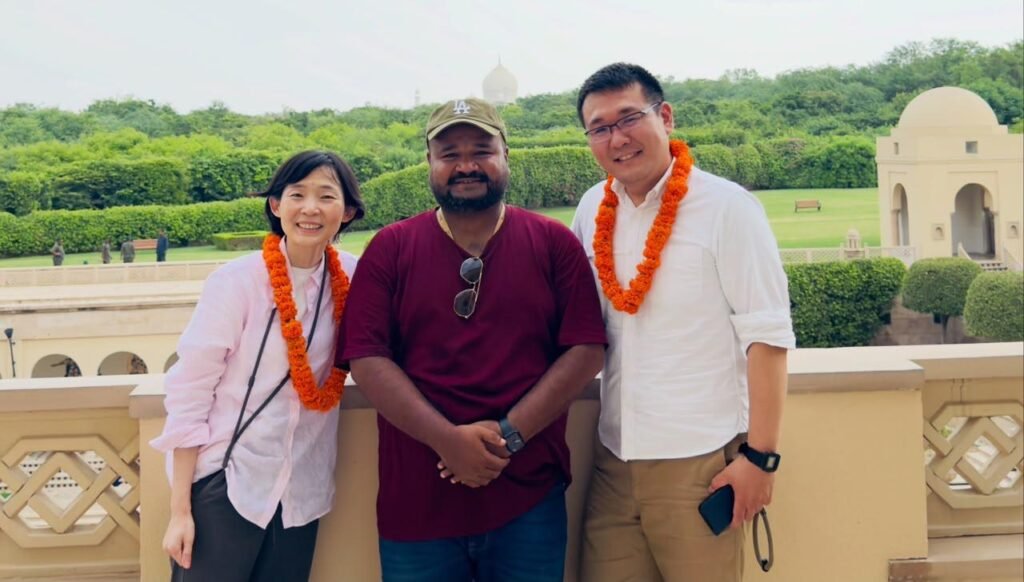
Why Travelers Trust Mohd. Imran Khan
- 22+ Years of Professional Experience guiding travelers across Agra’s heritage sites
- Extensive Knowledge of Mughal History, from Agra Fort’s political past to the Taj Mahal’s architecture
- Personalized Private Tours shaped around each traveler’s interests and pace
- Experience Assisting International Travelers from a wide range of countries and backgrounds
- Friendly and Professional Approach that keeps tours informative without feeling rehearsed
- Flexible Tour Planning, including half-day, full-day, and multi-day Golden Triangle itineraries
- Trusted by Travelers from Around the World, including families, couples, and solo visitors
- Focus on Authentic Local Experiences, beyond just the standard monument stops
Author Bio
Author: Mohd. Imran Khan Role: Senior Agra Tourist Guide Experience: 22+ Years Specialization:
Organization: Amsah Tours
Final Thoughts
Finding the best tourist guide in Agra comes down to a few consistent factors: a verified license, genuine communication skill, and a willingness to adapt the tour to you rather than the other way around. Whether you choose a government-approved guide for peace of mind or a private guide for flexibility, the goal is the same — turning a walk through old stone monuments into a story you actually remember.
Agra rewards travelers who take a little time to plan. With the right guide, the Taj Mahal stops being just a photo stop and becomes what it always was: one of the most human stories in architecture. Take the time to verify credentials, agree on pricing upfront, and book early — and your visit to Agra will likely become one of the most memorable parts of your India trip.
Frequently Asked Questions
1. Who is considered the best tourist guide in Agra?
The best guides are government-licensed professionals with years of on-ground experience, strong English communication skills, and a personalized approach rather than a fixed, rehearsed tour script.
2. How much does a tourist guide cost in Agra?
Half-day guides typically charge ₹800–₹1,500, while full-day tours range from ₹1,500–₹2,500, depending on group size, season, and whether transport is included.
3. Do I need to book a guide in advance?
Yes, especially during peak season (October–March), when experienced guides get booked quickly. Booking 24–48 hours ahead is generally recommended.
4. Is it safe to hire a guide directly at the Taj Mahal gate?
It’s risky. Many unlicensed individuals approach tourists at the gates. It’s safer to book a verified guide in advance through a known agency.
5. How can I verify if a guide is licensed?
Ask to see their official ID card issued by the Archaeological Survey of India or Uttar Pradesh Tourism before the tour begins.
6. What’s the difference between a private guide and a group tour?
Private guides offer flexibility and personalized pacing, while group tours are more budget-friendly but follow a fixed schedule and pace.
7. Are English-speaking guides available in Agra?
Yes, though fluency varies significantly between guides. It’s best to specifically request an English-speaking guide rather than assume it by default.
8. What sites can a good Agra guide cover in one day?
A well-planned day typically includes the Taj Mahal, Agra Fort, and either Itmad-ud-Daulah or Mehtab Bagh, depending on time and interest.
9. What time is best to visit the Taj Mahal with a guide?
Sunrise visits are widely recommended for smaller crowds, softer light, and a more comfortable temperature, especially between March and October.
10. Can a guide help avoid long queues at the Taj Mahal?
Yes. Experienced guides know entry gate patterns and peak timing, which can save visitors significant waiting time.
11. Do guides charge extra for entry tickets?
Entry tickets are usually billed separately from the guide’s fee unless explicitly stated otherwise. Always confirm this before the tour.
12. Is it worth hiring a guide for a half-day only?
Yes, if you’re short on time. A half-day guide can comfortably cover the Taj Mahal and Agra Fort, the two most essential sites.
13. Can guides accommodate families with children or elderly travelers?
Experienced private guides are generally flexible with pacing and can adjust the tour to suit families, elderly visitors, or travelers with mobility concerns.
14. What should I avoid when hiring a guide in Agra?
Avoid unlicensed individuals approaching you at monument gates, unclear pricing agreements, and guides who push shopping detours.
15. Where can I find official visitor guidelines for the Taj Mahal?
Official timings, entry rules, and travel information are available on the Official Taj Mahal website and the Agra District tourism page.