Introduction: The Moment You First See It
Nothing prepares you for that first glimpse of the Taj Mahal.
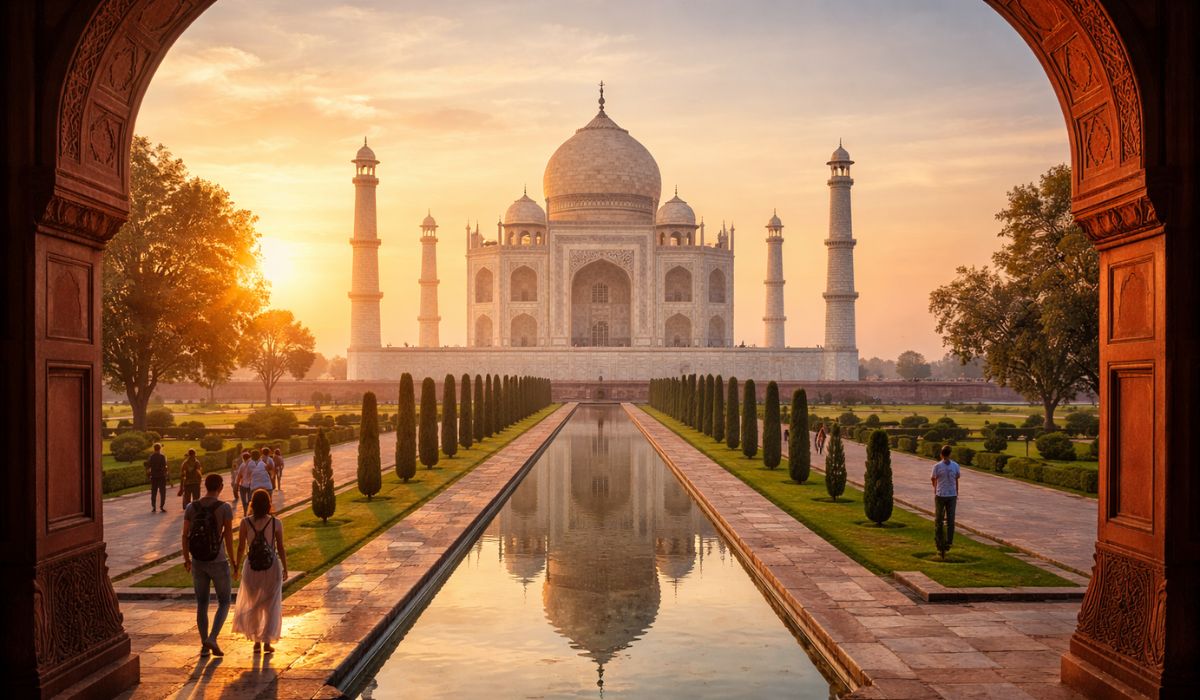
You walk through the red sandstone arch of the Great Gate, and suddenly — there it is. White marble glowing against the sky. Perfectly symmetrical. Impossibly beautiful. Your hands automatically reach for your camera.
But here’s the thing — millions of people visit every year, and most walk away with the same blurry, overcrowded shots. The Taj Mahal deserves better. You deserve better.
Whether you’re a DSLR enthusiast, a phone photographer, or a couple wanting dreamy travel portraits — this Taj Mahal photography guide will help you capture images that look like they belong in a magazine. Not just a memory. A masterpiece.
Quick Taj Mahal Photography Checklist
Before we dive into the full guide, here’s your quick-reference checklist. Save it. Screenshot it. Refer to it on the morning of your visit.
- Arrive at the gates before sunrise (aim for 15–20 minutes before opening)
- Book your entry tickets online in advance
- Carry at least one extra fully charged battery
- Bring a compact travel tripod (for sunrise and reflection shots)
- Use a wide-angle lens or wide mode on your phone
- Wear light, solid colours — avoid white and neon
- Clean your camera lens and phone lens before entering
- Visit on a weekday — weekends are significantly more crowded
- Shoot reflection shots early morning (water is calm, no wind yet)
- Keep your bag light — security checks take time, stay relaxed
- Plan a second stop at Mehtab Bagh for the rear river view
- Download Lightroom Mobile or Snapseed for on-the-go editing
This checklist alone can save you from the most common mistakes photographers make at the Taj Mahal.
Why the Taj Mahal Is a Dream Destination for Photographers
The Taj Mahal isn’t just a monument. It’s a living canvas that changes every single hour.
At sunrise, the marble blushes pink and gold. By midday, it turns blindingly white under the sun. As the afternoon melts into evening, the dome catches warm amber tones. And on a full moon night? It almost glows from within, like something out of a fairytale.
After multiple sunrise visits at different times of day, one thing becomes very clear — no two hours at the Taj look alike. That’s what makes it one of the most endlessly photographable places on earth.
There’s also the architecture itself — the perfect symmetry, the intricate inlay work, the reflecting pool stretching out in front. Every angle offers a different story. For travel photography, few subjects in the world are this generous.
Best Time to Photograph the Taj Mahal
Taj Mahal Sunrise Photography: The Golden Hour
If you do one thing right, make it this — arrive before sunrise.
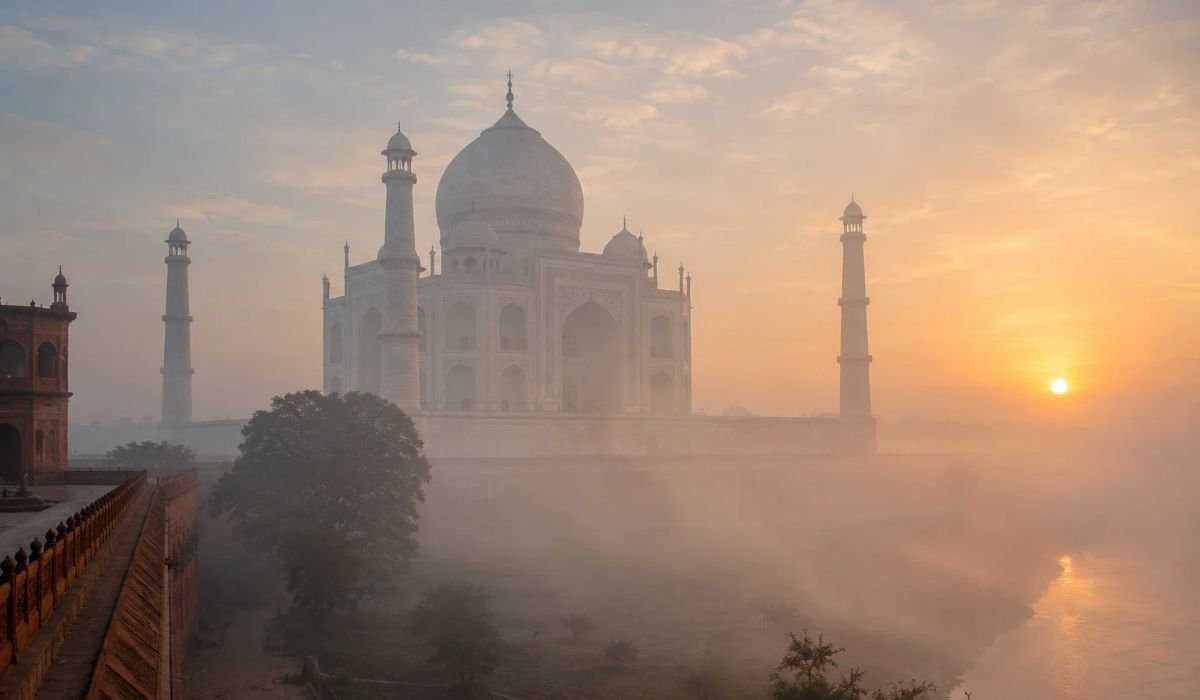
The Taj opens at dawn, and the first 30–45 minutes are pure magic. The light is soft and warm, painting the white marble in shades of peach and gold. The crowds haven’t arrived yet. The air is still. You can actually hear the birds.
After multiple sunrise visits to the Taj Mahal, this window — those first 45 minutes — is consistently where the best photos happen. The marble seems to hold the light differently at this hour. There’s a warmth and softness that disappears completely once the sun climbs higher.
This is hands-down the best time to photograph the Taj Mahal. Set your alarm early. It’s worth every minute of lost sleep.
Pro tip: If you’re travelling from Delhi, consider booking the Amsah Tours Sunrise Taj Mahal Tour — they time the departure from Delhi specifically to get you through the gates at first light, before the crowds arrive.
Morning Light: Soft, Flattering, Forgiving
Between 7:30 AM and 9:30 AM, the light is still beautiful — slightly brighter and more neutral. This is great for detail shots of the marble inlay, the calligraphy panels, and the floral carvings. The reflection pool also works wonderfully during this window.
Midday: Avoid If You Can
The harsh overhead sun from 11 AM to 2 PM flattens everything and creates ugly shadows. Unless you’re specifically going for a high-contrast architectural look, midday is the toughest time to shoot.
Sunset: Warm Tones, Thinner Crowds
Late afternoon, roughly 4 PM onwards, brings beautiful golden light from the west. The dome turns warm honey-amber. Plus, many tourists have left by this point, giving you a slightly cleaner shot. Sunset at the Taj is underrated — give it a try.
Full Moon Nights: A Rare and Magical Experience
The Archaeological Survey of India occasionally opens the Taj Mahal for moonlight viewing around full moon nights. The white marble under moonlight is one of the most surreal sights you’ll ever see — and photograph. If your travel dates align, don’t miss this.
Best Photography Spots Around the Taj Mahal
The Main Gate Symmetry Shot
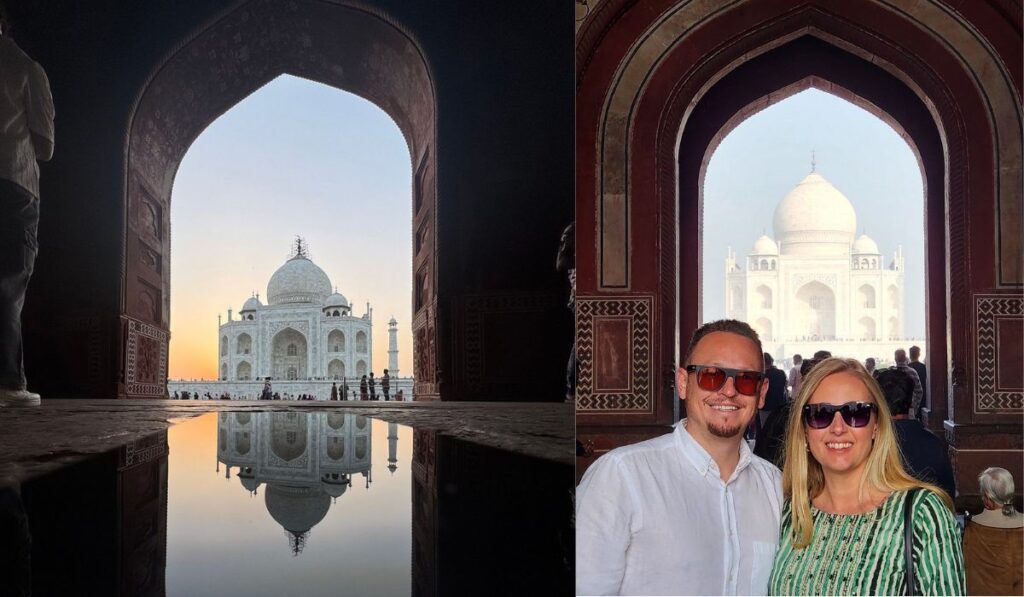
Walk through the Great Gate and stop. Don’t rush forward. Right here, framed by the arch, lies one of the most iconic shots in travel photography. The Taj sits perfectly centred within the gate’s frame. Use the arch as a natural leading line. Keep your camera level, use the central line of the pathway, and let the symmetry do the work.
Local photographers in Agra often recommend pausing here for a full two minutes before shooting — just to observe how the light falls through the arch at different positions. Moving even a metre left or right changes the composition dramatically.
Reflection Pool Photography
The long rectangular pool leading up to the Taj is your best friend. Get low — very low — to the ground. Shoot at a wide angle and let the reflection double the monument. The water acts like a mirror in the early morning when it’s calm and undisturbed.
For the cleanest reflection shot, position yourself slightly to one side of the central fountain. Avoid the very centre — that’s where everyone stands, and crowds tend to break the reflection.
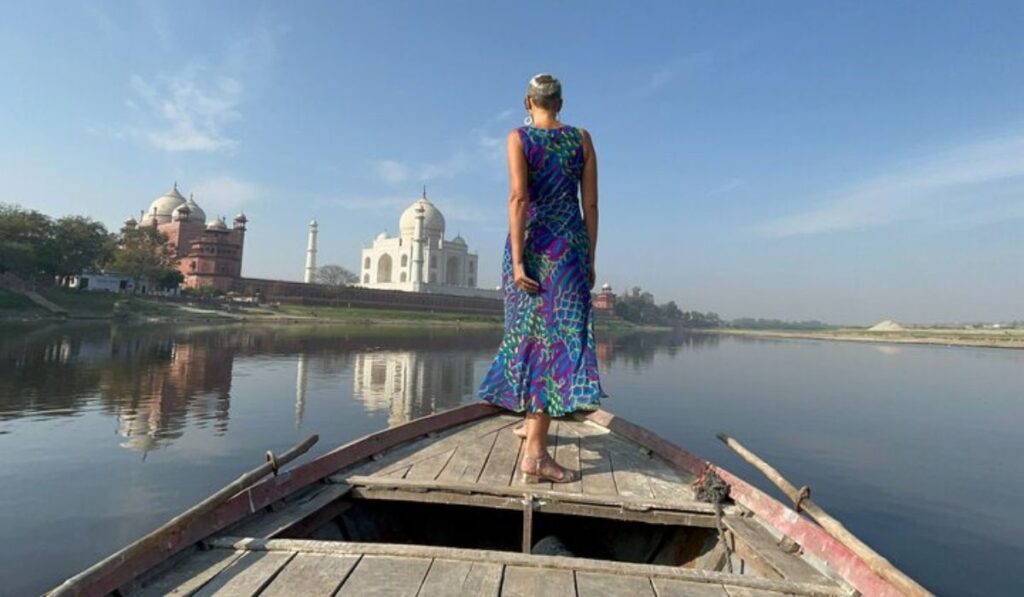
Mehtab Bagh: The Secret View Across the River
This is one of the most underrated Taj Mahal photo spots, and most tourists never even visit.
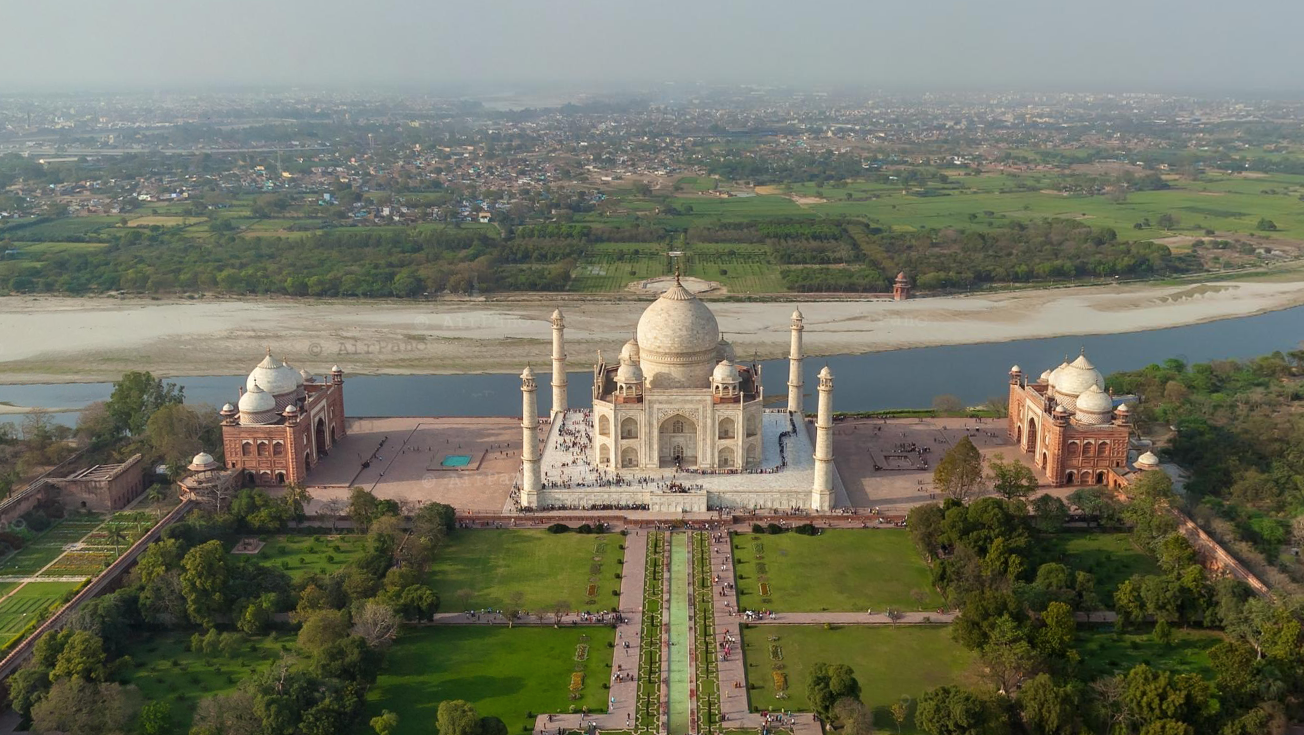
Mehtab Bagh is a Mughal garden located directly across the Yamuna River from the Taj Mahal. From here, you get a completely unobstructed rear view of the monument — with the river in the foreground and the dome rising behind it. Sunrise from this spot is extraordinary. The misty river, the glowing dome, the silence — it’s a completely different perspective that feels almost private.
Many travellers miss this hidden angle entirely — simply because no one tells them it exists. It doesn’t appear on most standard tourist maps, and the majority of visitors never cross to the other side of the river.
To get here, you need to cross the Yamuna by boat or take the road around. It’s highly recommended to visit with a local guide who knows the exact vantage points. If you’re booking an Agra overnight tour with Amsah Tours, ask specifically to include Mehtab Bagh at sunrise — staying overnight gives you the flexibility to be there at exactly the right moment.
The Diana Bench: Famous for a Reason
Near the left side of the garden, there’s a simple white marble bench where Princess Diana famously sat for a photograph in 1992. The angle from this bench frames the Taj perfectly without any foreground distractions. It’s great for solo portraits and solo traveller shots. Many people miss it. Don’t be one of them.
Hidden Angles Tourists Miss
Side towers (minarets): Walk to the very corner of the main platform. From here, you can photograph diagonally — with one minaret in sharp focus in the foreground and the dome slightly behind. It adds tremendous depth.
The mosque doorways: The red sandstone mosque on the left side of the Taj has beautiful arched doorways. Use them as a frame for a creative wide shot of the main mausoleum.
The garden pathways: Shoot from ground level looking up the cypress-lined paths leading to the Taj. The trees create natural leading lines and add depth to what might otherwise be a flat shot.
Local photographers in Agra often point out that the diagonal corner minaret shot is almost never seen in mainstream travel photography — yet it’s one of the most compositionally interesting angles the monument offers. A knowledgeable local guide can take you to these spots quickly and help you avoid being in the wrong place at the wrong time.
Camera Angles and Composition Tips
Use the Rule of Thirds Thoughtfully
The Taj Mahal is built on perfect symmetry — and that’s actually a great reason to break the rule of thirds sometimes. Centred compositions work beautifully here. But when you’re including a person, foreground element, or reflection, the rule of thirds adds dynamism.
Get Low for Reflection Shots
Kneel or lie flat on the ground. The lower your camera, the bigger and more dramatic the reflection appears. This is especially powerful when shooting the reflection pool.
Use Leading Lines Everywhere
The pathways, the pool, the minarets, the garden rows — all of these naturally guide the viewer’s eye toward the Taj. Use them deliberately in your framing.
Shoot Both Wide and Tight
A wide shot establishes the scale and grandeur. A tight close-up of the marble inlay, the calligraphy, or the reflection in the pool tells a completely different story. Both are powerful. Shoot both.
Taj Mahal Photography with Your Phone
You absolutely don’t need a DSLR to take stunning Taj Mahal photos.
Here’s what works on a smartphone:
- Use portrait mode for solo and couple shots — the background blur creates a beautiful, professional look.
- Turn on the grid lines in your camera settings to help with alignment and symmetry.
- Shoot in RAW or ProRAW if your phone supports it — it gives you far more flexibility when editing.
- Avoid digital zoom — move closer physically instead. Zoom degrades quality quickly.
- Use a small travel tripod or prop your phone on your bag for low-light shots at sunrise.
- Clean your lens before shooting — sounds obvious, but it makes a real difference.
The latest flagship phones from Apple, Samsung, and Google shoot the Taj beautifully. Don’t let gear stop you.
DSLR and Camera Settings Tips
For those shooting with a dedicated camera, here’s a basic starting point:
- Sunrise/golden hour: ISO 200–400, f/8–f/11, shutter speed adjusted for exposure. Use a tripod for the sharpest possible results.
- Reflection shots: Use a polarising filter to cut glare from the water and deepen the sky.
- Architectural details: Shoot at f/8–f/11 for maximum sharpness across the frame.
- Full moon nights: Use a tripod, ISO 800–1600, and a longer exposure (5–15 seconds) to capture the luminous quality of moonlit marble.
- White balance: Set to “cloudy” or “shade” during golden hour to preserve warm tones. Auto white balance tends to neutralise them too much.
Best Poses for Solo Travellers and Couples
Solo Traveller Poses
- Sit on the Diana bench and look towards the Taj — don’t look at the camera.
- Stand at the edge of the reflection pool with your feet near the water.
- Walk slowly along the pathway and have a friend capture a candid shot from behind.
- Sit cross-legged in the middle of the garden path and face the Taj.
Taj Mahal Couple Photography
The Taj Mahal is already the world’s most famous monument to love — couple shots here practically create themselves. Some beautiful poses to try:
- Hold hands and walk along the reflecting pool pathway.
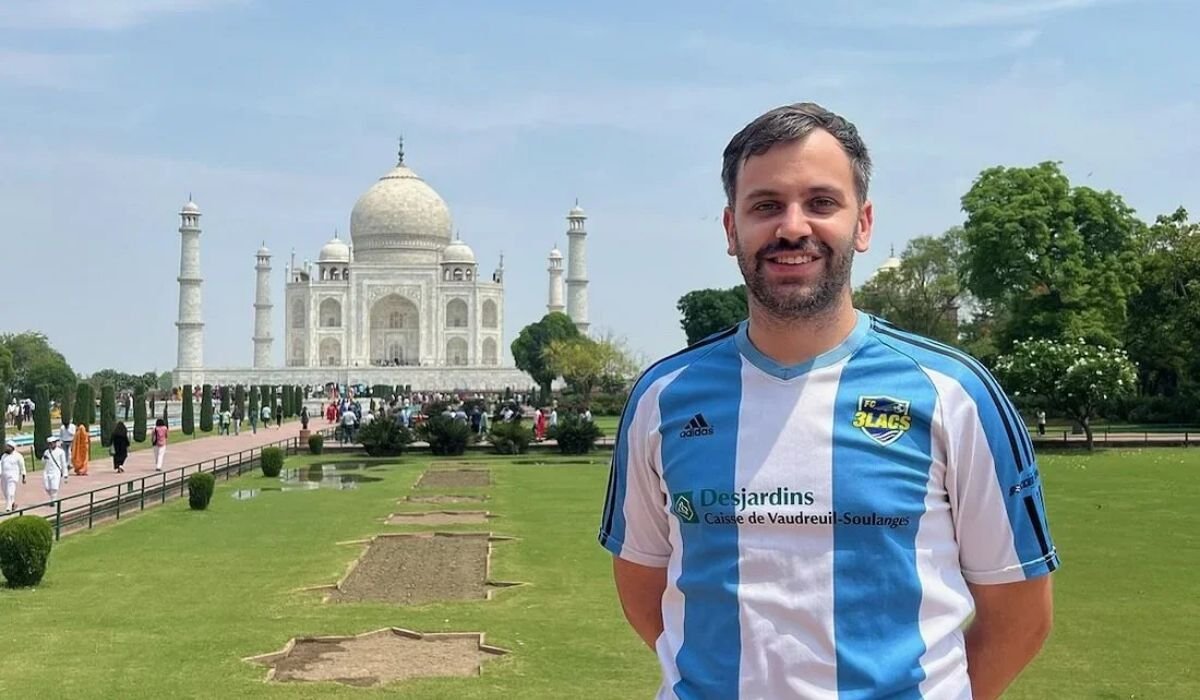
- Stand facing each other in front of the Taj — not looking at the camera — for a natural, intimate shot.
- Use the symmetry of the main gate for a perfectly balanced couple portrait.
- Sit together on the marble steps leading up to the mausoleum (before the no-entry zone begins).
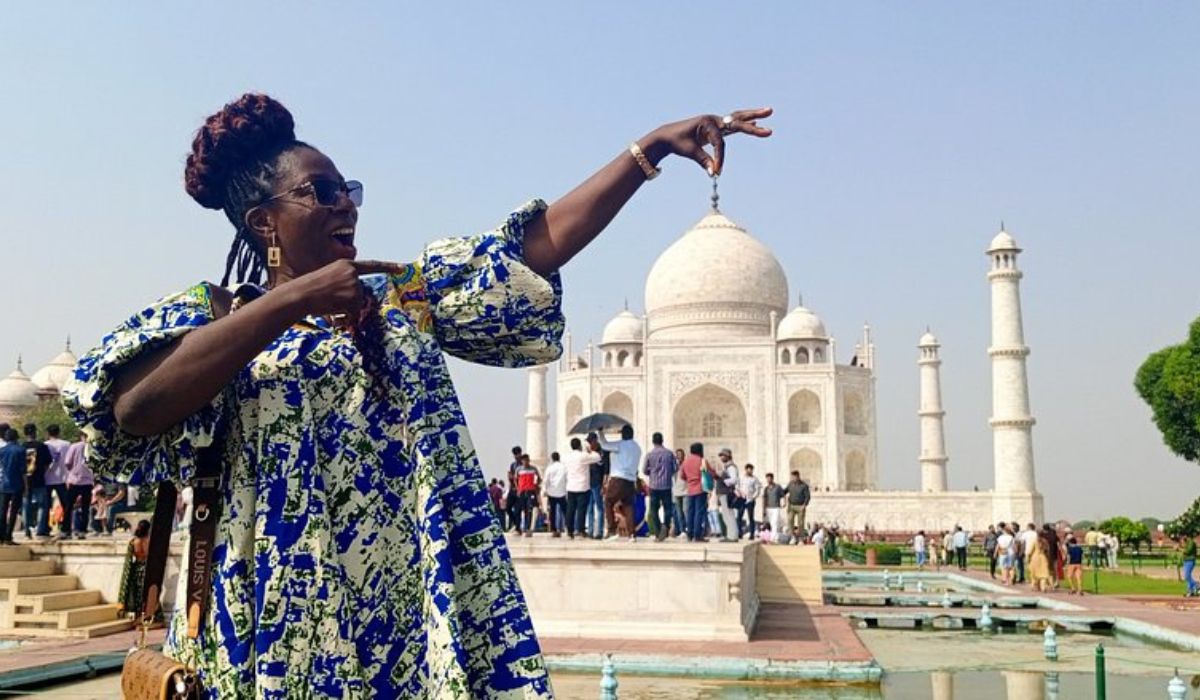
After accompanying couples to the Taj on multiple visits, the most emotional — and most beautiful — shots are almost always candid. Stop posing. Just stand together, look at the monument, and let the photographer capture that genuine moment of awe.
If you’re planning a romantic Agra trip, the Amsah Tours Golden Triangle Tour includes Agra alongside Delhi and Jaipur — a perfect way to weave Taj Mahal couple photography into a broader India journey.
Instagram and Reels Ideas at the Taj Mahal
- Film a slow walk through the Great Gate with the Taj Mahal reveal behind you — this makes for a stunning Reel opening.
- Do a before-and-after edit video showing the Taj at sunrise vs midday — great educational content.
- Create a “5 angles you’ve never seen” carousel post.
- Film the reflection pool slowly from ground level — short clips like this perform incredibly well.
- A time-lapse from the Mehtab Bagh side showing the morning light shifting across the dome is genuinely breathtaking content.
What to Wear for Taj Mahal Photos
This matters more than people think.
Light, solid colours photograph beautifully against the white marble — blush pink, sky blue, cream, sage green, and soft yellow all look stunning. Avoid busy patterns that clash with the Mughal architecture.
For women, a flowing dress or saree works gorgeously for both the colour and the movement in photos. For men, a linen shirt in a muted tone photographs elegantly.
Avoid white — you’ll practically disappear against the marble. Avoid neon — it looks harsh in photographs. And bring a scarf — it’s a mosque complex, and covered shoulders are respectful and required.
Photography Rules Inside the Taj Mahal
A few things to know before you go:
- Photography is not permitted inside the main mausoleum chamber (where the cenotaphs are).
- Tripods are not allowed inside the complex without special permission.
- Drone photography is strictly prohibited.
- Selfie sticks are generally fine in the outer garden areas.
- Flash photography is discouraged even in permitted areas.
- Professional film and video crews require a separate permit.
Respect these rules. The monument has survived 375 years — help it survive a few more.
Editing Tips for Taj Mahal Photos
The Taj Mahal’s natural colours are already gorgeous, so less is more when editing.
- Increase clarity slightly to bring out the marble texture and carved details.
- Cool down shadows and warm up highlights slightly for a balanced, timeless look.
- Add a touch of dehaze if you shot in the misty morning — it helps define the dome.
- Keep skin tones natural in portrait shots — over-saturation looks artificial.
- For sunrise shots: A gentle lift in the orange and yellow tones enhances that golden glow without looking fake.
Apps like Lightroom Mobile, Snapseed, and VSCO work beautifully for post-processing Taj Mahal shots on your phone.
How a Local Guide Transforms Your Photography Experience
Here’s an honest truth: you can visit the Taj Mahal on your own and get decent photos. But a good local guide takes your experience — and your shots — to another level entirely.
An experienced guide knows:
- Exactly which spot to stand for the cleanest reflection photo
- When the morning light hits the main dome at the most flattering angle
- How to get you to Mehtab Bagh at the right time
- Which pathways are least crowded and when
- The hidden architectural details that most tourists photograph incorrectly
Local photographers in Agra will tell you the same thing: preparation and positioning account for at least 70% of a great Taj Mahal photo. The camera matters far less than knowing where to stand and when to press the shutter.
Whether you’re visiting on a quick day trip from Delhi or spending a full day in Agra, having a guide by your side makes the difference between a good visit and an unforgettable one.
Explore these curated tour options from Amsah Tours:
- Same Day Taj Mahal Tour from Delhi — Perfect for travellers with limited time who want to maximise their photography window.
- Sunrise Taj Mahal Tour — Timed specifically for the golden hour. The single best photography experience at the Taj.
- Golden Triangle Tour — Combines Delhi, Agra, and Jaipur into one beautifully planned itinerary.
- Agra Overnight Tour — Gives you both sunrise and sunset at the Taj, plus time for Mehtab Bagh and the Agra Fort.
Their team includes guides who have accompanied photographers, travel bloggers, and Instagram creators — they understand what a great shot needs, not just what a standard tour covers.
Frequently Asked Questions About Taj Mahal Photography
1. What is the best time of day for Taj Mahal photography?
Sunrise is universally considered the best time. The light is soft and golden, crowds are minimal, and the marble glows in a way that simply can’t be replicated later in the day.
2. Can I use my DSLR camera inside the Taj Mahal complex?
Yes, DSLR cameras are permitted in the gardens and outer areas. However, photography inside the main mausoleum chamber is not allowed. Tripods require special permission.
3. Is phone photography good enough for the Taj Mahal?
Absolutely. Modern smartphones — especially flagship models — produce stunning results, particularly during golden hour. Use a tripod for sunrise shots to avoid blur.
4. What is the best angle for Taj Mahal photos?
The reflection pool centred shot is iconic, but the Mehtab Bagh rear view, the Great Gate framing, and the diagonal corner shots from the platform are all excellent alternatives.
5. Can I photograph the Taj Mahal at night or during a full moon?
The Taj Mahal is open for moonlight viewing on select nights around the full moon each month. Photography is permitted during these sessions. It’s a rare and extraordinary experience.
6. What should I wear for Taj Mahal couple photography?
Solid, light colours photograph best against the white marble. Blush pink, ivory, sky blue, and sage green are all flattering. Avoid matching white outfits — you’ll blend into the background.
7. Are drones allowed at the Taj Mahal?
No. Drone photography is strictly prohibited at the Taj Mahal. Violators can face serious legal penalties.
8. How can I avoid crowds in Taj Mahal photos?
Arrive at opening time (just before sunrise), visit on weekdays rather than weekends, and explore angles like Mehtab Bagh and the side garden pathways that most tourists skip entirely.
Conclusion: Go Early, Stay Curious, Shoot From the Heart
The Taj Mahal is one of those rare places that genuinely exceeds expectations — and that’s saying something for a monument with this much hype.
But the difference between a forgettable snapshot and a truly stunning photograph comes down to timing, preparation, and knowing where to stand. Arrive at sunrise. Explore beyond the obvious spots. Get low at the reflection pool. Visit Mehtab Bagh. Let the light and the marble do what they do best.
And if you want to make the experience completely effortless — photography stops, hidden angles, and all — the team at Amsah Tours has designed their Agra tours specifically around experiences like this. From the same-day Taj Mahal tour to multi-day Golden Triangle itineraries, their local guides know this monument like the back of their hand.
The Taj Mahal waited 375 years for you to arrive. Make sure your photos are worth the wait.
Read More About Delhi Tourist Places – 15 Best Tourist Places Near New Delhi Railway Station